


Why Recognizing the Signs of Substance Addiction Matters
Drug dependence is a very serious problem that millions of people around the world suffer from. Indulging in substances such as alcohol or prescription drugs seem to be innocent actions, however, if the substances are abused, the person can easily get addicted and end up facing serious physical and mental health deterioration. It is quite necessary to be able to recognize the patterns of substance misuse because that knowledge may provide a lifeline not only to the addicts themselves but to their loved ones around them including family, friends, and caregivers.
Knowing these signs of substance addiction can enable the individual to ask for help when they are facing addiction. These drugs and alcohol habits mostly get reflected in the behavior and emotions of the users. This post presents the leading 10 drug or alcohol use signs a person may hide from you. It mainly discusses characteristics of changes in behavior and mood state as well as changes in physical health. Besides, it touches upon mental disorders like anxiety and depression, which at times co-exist with drug addiction. This all around instruction manual is a useful tool that will help you detect the early signs of drug misuse and hence take the first step toward recovery.
1. Noticeable Changes in Behavior
One of the most typical indicators of substance addiction is a significant change in one’s behavior that can be easily noticed. People who have anxiety and depression linked to addiction usually show conscientious or impulsive behaviors totally inconsistent with their normal character. Some of the behavior manifestations include:
- Stop participation in social activities and hobbies
- Becoming more secretive or isolated
- Getting easily irritated, angry, or having mood swings
These behavioral changes related to drug misuse are often mechanisms of denial to support their dependency or to control the discomfort of withdrawal. The statistics from the National Institute on Drug Abuse (NIDA) indicate the fact that changes in behavior were already noticeable in over 70% of individuals even before their addiction was officially diagnosed, thus placing a significant value on early discovery of these patterns.
2. Physical and Health-Related Symptoms
Drug addiction is frequently accompanied by physical alteration and health problems. The consequences to health effects of substance abuse are different to a certain extent depending on the specific drug but basically, they include:
- Being incredibly thin or extremely overweight
- Bloodshot or very big eyes
- Dirty and disheveled
- Sick very often and prone to infections
Early identification of these signs of substance addiction may lead to a situation where the damage is not yet permanent, and people get motivated to obtain medical help and treatment.
3. Increased Tolerance and Cravings
A hallmark feature of an addiction is the creation of a high level of tolerance. Thus, a person will need greater quantities of a substance to get the same effect after a while. At the same time, addictive behavior symptoms, such as strong cravings and compulsive use, become more visible.
The misuse of prescription drugs can turn from intermittent use to complete addiction with daily use, and the user is so gripped with cravings as to be unable to meet their daily responsibilities.
Scientific studies have shown that tolerance and craving come as a result of alterations in the brain’s reward system. Once we understand these brain mechanisms, it becomes easier for families and medical professionals to use empathy when dealing with addicts instead of blaming them.
4. Emotional and Mental Health Struggles
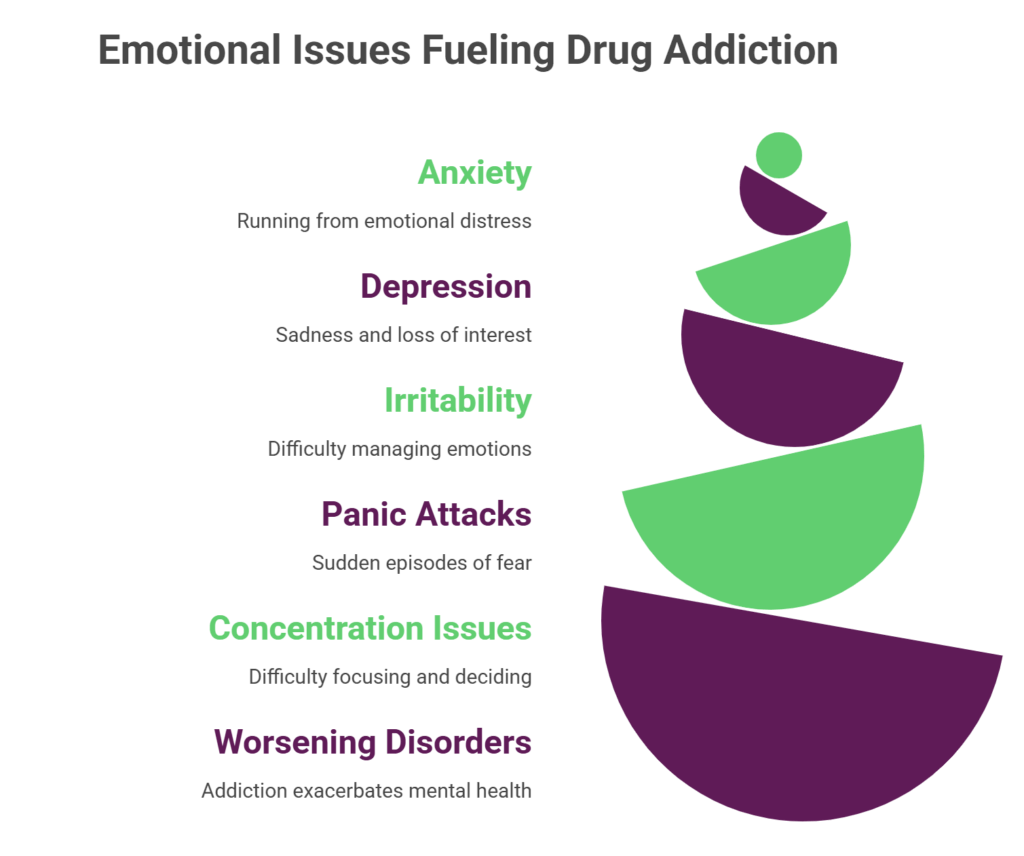
Emotional and psychological issues at times can be the main cause of drug addiction. Many individuals experience anxiety or depression due to their signs of substance addiction and, thus, these conditions can factor towards drug or alcohol use as a means of running away from emotional distress. Common indications of the presence of these disorders are persistent feelings of sadness, irritability, anxiety, or panic attacks that come and go, losing interest in things that were formerly enjoyable, and difficulty in concentrating and decision making. As a person becomes more deeply addicted, such disorders usually get more severe, so it becomes viable that one is getting help very difficult.
5. Neglecting Responsibilities
When addiction deepens, the first things to go are usually a person’s personal and professional commitments. It is possible that a person who is using drugs might miss work deadlines, not show up to family gatherings or stop contacting friends without knowing these are the signs of deeper substance abuse problems.
It is possible that relationships get tight because of the things being left undone and also because the person has a change of mood and becomes unreliable. Family members can be worried and at the same time the person who has a problem with drugs or alcohol may behave defensively or in a dismissive way. This kind of social withdrawal not only leaves the addict alone but also he or she loses the most important support systems which could help in getting better.
6. Risky or Dangerous Behavior
People who are dependent on substances often do things that are considered risky or dangerous and they may not fully weigh the consequences of their actions. For example, they may:
- Drive while impaired by alcohol or drugs
- Unprotected or impulsive sexual activity
- Engage in criminal or illegal drug activities
Not only are they putting themselves in danger, but they are also jeopardizing the safety of the people around them. Such risky behaviors often become the most obvious signal that the person is struggling with substance addiction.
7. Social Isolation and Relationship Strain
One common consequence of substance addiction is the progressive isolation of the person. They may gradually make less and less contact with their friends and family, choosing instead to be alone or with those who agree to their continued substance use. This particular addictive behavior symptom can lead to:
- the breakdown of friendships OR neglect of family members
- the loss of the social support circle
- the inability to start new relationships
A drug addict may isolate themselves so that no one will know about their drug abuse. In fact, social seclusion serves as both a sign and a trigger of addiction, as the feeling of being alone can increase the craving for drugs.
8. Legal and Financial Troubles
Addiction rarely comes alone. It most often leads to other issues like getting into legal and financial troubles. For example, addicts can be arrested for possession, driving under the influence (DUI),or theft if they steal to get money for their drugs. Besides that, becoming addicted can also make a person’s finances unstable due to:
- Spending a lot of money on drugs.
- Ignoring bills or debts.
- Borrowing or stealing money to support addiction
It is very important to understand that these problems are just signs of substance addiction. Any time, one seeks help to prevent major legal consequences which can be avoided by setting a path to the normal financial and social situation.
9. Denial and Defensiveness
Denial is one of the most frequent psychological responses in persons with addiction. Drug users may minimize the damage caused by their drug use, put the blame on others, or simply refuse help.
Some typical signs of substance addiction are getting defensive, when questioned about drug use, covering up the extravagance with finding faults, and not admitting to harm the drug has caused in one’s life.
10. Withdrawal Symptoms
Lastly, experiencing withdrawal symptoms is a strong signs of substance addiction. When a person ceases or cuts back on their drug use, they may go through:
- sweating or trembling
- nausea or vomiting
- anxiety or irritability
- sleep disorders
Withdrawal symptoms differ based on the substance but mostly represent the body’s physical dependence on it. Being subjected to such symptoms definitely means that one needs treatment and support.
About Alpha Healing Center
Alpha Healing Center functions as the top rehabilitation center in India which specializes in complete addiction treatment and sustainable recovery solutions. The center provides treatment programs which combine scientific evidence with compassionate care to develop customized solutions that treat addiction and mental health issues.
The center provides residents with a peaceful and secluded space which contains exceptional amenities that feature comfortable living spaces and medical detoxification services and therapeutic counseling and complete wellness treatments including yoga and mindfulness practices. The center establishes a safe environment which promotes mental and physical recovery through its team of skilled experts from various fields.
Recognizing the Signs Is the First Step Toward Healing
Understanding how to identify signs of substance addiction provides essential support for preserving both physical health and mental health. Early detection enables both people and their families to tackle dangerous behaviors before they create permanent damage and relationship problems and severe mental health difficulties. Addiction exists as a medical condition which needs proper treatment through comprehension and backing and professional assistance. At Alpha Healing Center, our treatment program uses evidence-based methods to deliver compassionate care which targets the fundamental reasons behind addiction while helping people achieve permanent recovery. The actions you take today will create opportunities for healing and stability which lead to better health in your future.
Frequently Asked Questions
What are the earliest signs of substance addiction?
The first symptoms of a condition manifest through clear behavioral modifications which include social withdrawal and mood swings and irritability and secretive conduct. The physical signs of an illness include visible changes in the body and repeated episodes of sickness.
Can addiction cause physical health problems?
Yes. People who abuse drugs over long periods will experience body damage which affects their liver and heart and lung functions together with their immune defense and nutritional status. The common warning signs include physical changes and weight fluctuations and persistent health problems.
How can family and friends help someone struggling with addiction?
The process requires people to communicate through supportive methods which do not judge others. Professional help should begin with therapy attendance while emotional stability helps the person maintain recovery without suffering from shame or blame.