


Managing PTSD to Prevent Substance Abuse
Various individuals across the globe are suffering with post-traumatic stress disorder (PTSD) that can change how the stress, feelings and memory are processed. There is also a behavioral pattern of many individuals with PTSD to develop harmful handling strategies such as use of substances. It is important to understand the PTSD substance abuse link in order to have a timely response and proper treatment. At Alpha Healing Center we focus on the idea that trauma recovery and addiction treatment are frequently connected, and appropriate instructions can help avoid any complications in the long term.
In this case, people who are recovering, emotional regulation, daily functioning, and personal relationships may be more challenging because of PTSD. The emotional residual of traumatic events may be disturbing them and some people try to cover it with the help of alcohol, and illegal drugs. The initial identification of the symptoms of PTSD and substance abuse is one of the important steps toward the effectiveness of the long-term recovery plan.
How PTSD Develops and Affects Daily Life
PTSD may happen when someone has undergone or observed a traumatic experience such as violence, accidents. The disorder can be in the form of flashbacks, unwanted thoughts, constant alertness, and emotional detachment. Such symptoms usually disrupt work, family and socialization.
The PTSD substance abuse link is evident since untreated traumatized persons might seek a substance as a means of self-medication or to forget the traumatic memories. The use of substances may help hide symptoms, but it may cause substance dependence and breakdown in mental health. Alpha Healing Center understands why it is essential to learn about trauma triggers in the process of PTSD or addiction recovery, and it provides specific interventions to interrupt this process.
Why Trauma and Substance Use Often Occur Together
Traumatic experiences have a close relationship with addiction. A lot of them start taking substances to address their stress, anxiety, or PTSD-related depression. What may begin as occasional usage may over time turn into dependency. This is what is referred to as PTSD and substance abuse with emphasis on the fact that one illness may aggravate the other.
Brain chemistry is compromised by trauma and changes the reaction of dopamine and stress hormones. By taking on self-medication through substances, individuals reduce the pain in the short-term, but disrupt natural recovery mechanisms. The Alpha Healing Center can resolve these challenges through the integration of trauma-informed care with substance use interventions, which facilitates the use of healthier coping-strategies.
Common PTSD Symptoms That Increase Addiction Risk
A number of PTSD symptoms predispose one to substance abuse:
- Distinctness in emotions or inertness
- Insomnia and sleep disorders
- Observation or hyper vigilance
- Irritability, mood swings, and anxiety
Such symptoms usually drive people into self-medication. Knowledge of the PTSD substance abuse link can enable the caregivers and healthcare providers to step in at an early stage. Alpha Healing Center conducted extensive evaluation to determine such high-risk behaviors to develop individualized treatment options.
The Impact of Substance Abuse on PTSD Symptoms
Although the use of substances can temporarily alleviate trauma-induced suffering, it increases the emotional difficulties in the long term. Substance abuse may aggravate PTSD symptoms by increasing frustration, increased levels of depression, and anxiety. Subsequently, people may experience the need to stay in a traumatic and addiction cycle.
In integrated recovery, such as in Alpha Healing Center, both substance dependence and PTSD are treated at the same time. The initial approach to provide the interventions aimed at decreasing the risk of relapse and achieving emotional stability in the long term is to understand the PTSD substance abuse connotation.
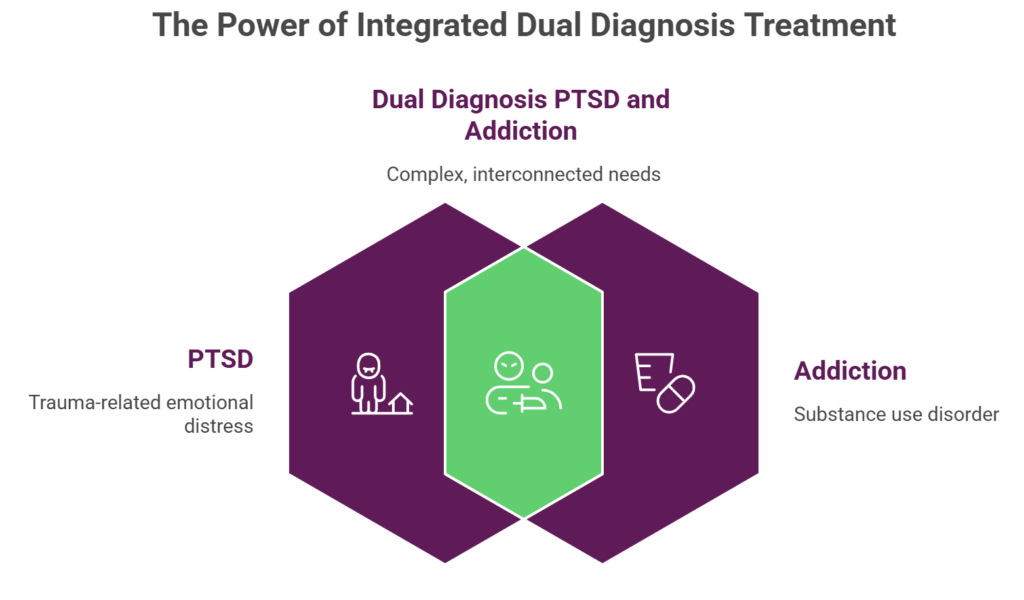
Dual Diagnosis: When PTSD and Addiction Occur Together
In the case of a simultaneous occurrence of PTSD and addiction, this is termed as a dual diagnosis PTSD and addiction. These patients need special care that would solve both problems. In one case, only addiction is given attention and not the underlying trauma which results in relapse and emotional downfalls.
Alpha Healing Center offers evidence-based treatment, such as cognitive behavioral therapy (CBT), trauma-focused treatment, and supportive counseling, which ensures that patients diagnosed with dual diagnosis PTSD and addiction are fully treated. This is a combined strategy that enhances emotional stability, and there is a higher chance of successful recovery.
The Importance of Early Identification and Support
Recognizing PTSD symptoms early in substance users is very important. There are signs, which should not be overlooked, e.g persistent memories, anxiety, or emotional withdrawal. The identification of PTSD substance abuse link enables experts and caregivers to deliver proper assistance and avoid persistent addiction trends.
Alpha Healing Center focuses on long-term recovery support and trauma-informed care. Early intervention lowers emotional distress levels, enhances the coping skills and encourages behavioral change in the long term.
Treatment Approaches for PTSD and Substance Abuse
The co-occurring PTSD and substance use treatment of individuals needs a combination of therapies and support systems:
- Behavioral therapy: Assists in the changing of negative thought patterns and substance-seeking behavior.
- Trauma-focused therapy: This treatment involves targeting the primary source of the PTSD symptoms and assists individuals to process trauma and do so in a safe manner.
- Medication treatment: Assists emotional stability and minimizes withdrawal symptoms when clinically necessary.
Combined modalities provided by Alpha Healing Center make sure that both trauma and addiction are addressed in a combined approach in order to promote long-term emotional and behavioral recovery.
The Role of Alpha Healing Center in Integrated Recovery
Alpha Healing Center focuses on dealing with the complex correlation between PTSD and substance abuse using an individualized and holistic approach. Knowing that trauma and addiction tend to interact, the center provides a safe, supportive and confidential space in which people will be able to investigate their experience with no judgment. The clients are guided to work through the trauma at their pace where they are taught effective coping mechanisms to deal with triggering events and difficulties in their emotions. Besides the trauma-oriented treatment, the center provides professional advice on substance use treatment, which will allow dual consideration of mental health and substance use issues. Their dual diagnosis approach implies that they are not treated separately, but in connection, and thus a more holistic and sustained recovery is ensured. Through therapy, coping skills development, and personalized support, the Alpha Healing Center will enable the individuals to exert their control, emotional balance, and better long-term well-being.
Building Emotional Resilience Over Time
The emotional resilience plays a critical role in dealing with the symptom of PTSD habit and avoiding relapse. Some of the stress management techniques, mindfulness, and journaling can enable people to cope with trauma without seeking substances. Through long-term recovery support programs in Alpha Healing Center, the patients are trained to control emotions, form healthy habits and stay sober.
Preventing Relapse Through Awareness
Post traumatic stress disorder, depression, and symptoms of anxiety are significant conditions that cause relapse. Knowledge of the PTSD substance abuse link enables patients and caregivers to predict high-risk scenarios and put up preventive measures. Routine therapy, peer support and routine programs decrease the risk of relapse and promote emotional stability.
Living a Balanced Life After Trauma and Addiction
Recovery does not mean simply stopping the use of substances but rather creating our lives of emotional balance, meaningful activity, and healthy connection. People who manage PTSD and addiction will have a higher chance of maintaining long-term recovery. Alpha Healing Center focuses on patient-centered practice, where individualized care plans are provided to assist people in getting back on their feet, feel confident, and have a sense of purpose.
Ongoing Support for Sustainable Recovery
The process of overcoming PTSD substance abuse link is a life-long process. The constant check up, treatment and peer counseling services offered by Alpha Healing Center make sure that emotional problems will be dealt with in their early stages before it gets out of control. This continuous assistance makes them stronger and prepares them to conquer life stress factors without necessarily using drugs.
Frequently Asked Questions (FAQs)
1. What is the substance abuse connection of PTSD?
The PTSD substance abuse link is the association between substance use and the PTSD related symptoms, wherein the substance is used to alleviate the PTSD symptoms.
2. Is it possible to treat PTSD and addiction simultaneously?
Yes. Integrated therapies like dual diagnosis recovery support which is provided at alpha healing center are used to treat PTSD and addiction.
3. What is the significance of trauma-focused care in the recovery of addiction?
By working on the underlying trauma, the relapse is prevented, the emotional distress is minimized, and the long-term recovery results are reinforced. The intervention based on trauma is crucial to holistic healing.