

Anxiety and Alcohol Abuse: Understanding the Dangerous Cycle
Anxiety disorders and alcohol misuse are closely linked, and many people do not notice the pattern until it begins to affect their health, relationships, and work. At first, it may just be an occasional drink to ‘take the edge off, ‘ but over time, it can become a deep pattern of anxiety and alcohol abuse, which people use to treat their anxiety symptoms, but which actually causes their symptoms to intensify. This cycle is by far more common than people think and it crosses age groups, professions, and social backgrounds. We are going to go through how anxiety disorders and alcohol abuse are related, look at the research on anxiety, driven drinking behavior, give you the warning signs, and share with you the most effective, evidence- based methods of breaking free and help in restoring balance, clarity, and mental health.
How Anxiety and Alcohol Feed Each Other
The anxiety alcohol abuse cycle is a vicious circle in which one hand anxiety leads to drinking and on the other hand drinking makes anxiety worse. At first, alcohol acts as a brain depressant; it slows down brain activity and produces a very short period of feeling calm or relaxed. In fact, if a person has been suffering from a vicious cycle of anxiety and alcohol for a long time, this relief might seem almost a miracle.
Nevertheless, the brain is a clever organ that hardly ever allows itself to be tricked. Repeated drinking, as a result of which the brain has to keep constantly adjusting, leads to changes in neurotransmitters such as GABA and glutamate, which are closely associated with the regulation of mood and stress. As the individual develops tolerance, he or she will require more alcohol to feel its soothing influence. This is the stage when an anxiety alcohol abuse cycle occurs, and one’s anxiety symptoms return even stronger than before and without drinking.
Why People Turn to Alcohol for Anxiety Relief
Drinking as a result of anxiety should not be considered as a sign of weakness or a lack of willpower. It is essentially how the mind works in its quest to relieve itself of discomfort that is the root of the problem. Alcohol is quick in its effect, socially accepted, and easily obtainable, which makes it the most/largest/more convenient choice of the source of relief for those who are confronting panic attacks, social anxiety, generalized anxiety disorder or work related stress.
There is a frequent overlap of alcohol misuse and mental health issues. However, both are largely underdiagnosed and untreated. Additionally, the drinking culture is another player in the background to the problem. Often, drinking is used as a means to relax, celebrate success, and cope with pressure.
Anxiety Symptoms During Alcohol Withdrawal
Alcohol withdrawal anxiety is one of the most difficult aspects of the anxiety alcohol abuse cycle to deal with. When alcohol consumption is suddenly reduced or stopped by a person who has been drinking regularly, the brain, which has been used to the depressant effects of alcohol, goes into a state of hyperarousal. This may bring on severe anxiety, panic, tremors, sweating, insomnia, and even heart palpitations.
Withdrawal anxiety is commonly confused with the return of the initial anxiety disorder and thus the person is misled to believe that they need alcohol to live a normal life. Actually, these symptoms are the body’s natural reaction to alcohol dependence. Such a misunderstanding usually ends up in relapse since drinking again offers momentary escape from withdrawal pain.
Mental Health and Alcohol Use Disorder
Using alcohol can be a reaction to anxiety and it can worsen or even cause anxiety disorders. Excessive alcohol misuse for a long time can mess up your sleeping pattern, exhaust your body of vital nutrients and make you lose your emotional regulation all these things, of course, leading to an increase in anxiety.
On top of that, people tend to drink alcohol to mask their psychological issues such as trauma, depression, or stress which, if ignored, may lead the person to believe that giving up alcohol is either impossible or unsustainable. Hence, only by jointly treating both anxiety and alcohol misuse can one go through a long, lasting recovery.
Signs of the Anxiety Alcohol Abuse Cycle
The vicious cycle of anxiety and alcohol is a gradual process that is mostly not noticed in its initial phase. Some warning signs at the beginning may be:
- Drinking to relax, sleep, or control nervousness instead of drinking for pleasure
- Increased tolerance and needing more alcohol to feel relaxed
- Feeling anxious, restless, or irritable when you are not under the influence of alcohol
- Drinking alcohol for coping with social situations or stress of performance
- Feeling guilt or shame about your drinking behavior
- Making several attempts to quit drinking but eventually give up
Stopping the anxiety-driven drinking behavior cycle requires more than just the absence of alcohol consumption. It requires understanding which events cause a person to drink and restoring their ability to control situations and treating anxiety through counseling and lifestyle modifications and professional assistance. The process of breaking this cycle requires more than just stopping alcohol consumption. The process requires understanding which events cause a person to drink and restoring their ability to control situations and treating anxiety through counseling and lifestyle modifications and professional assistance.
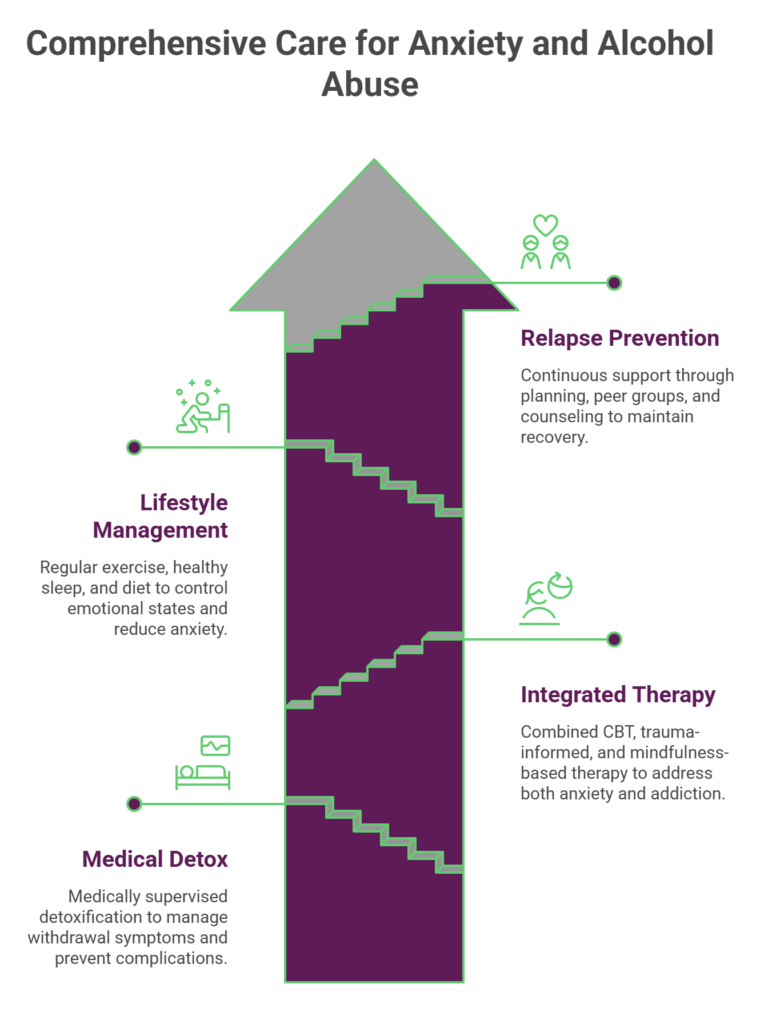
Comprehensive Care for Anxiety and Alcohol Abuse
People can successfully overcome their anxiety and alcohol addiction problems through their dedication, even though the process presents challenges. The most effective treatment approach requires simultaneous treatment of both existing issues, which prevents any single problem from being addressed.
Medical Detox and Stabilization
Medically supervised detoxification serves as the most effective treatment method for alcohol withdrawal anxiety which affects people with dependency. The method helps to decrease discomfort while preventing any potential difficulties that would hinder the complete process of physical and mental recovery.
Integrated Therapy for Anxiety and Addiction
The combined use of Cognitive Behavioral Therapy (CBT) with trauma-informed therapy and mindfulness-based methods has shown successful results in treating anxiety disorders that occur with alcohol dependence.
Lifestyle and Stress Management
The regular practice of exercise which people should perform according to their established schedules together with their sleeping patterns and their dietary habits serves as the essential factors which control their emotional states and help them reduce their anxiety levels. The people who practice yoga meditation and breathwork achieve natural nervous system relaxation which decreases their need for substance use.
Relapse Prevention and Aftercare
Continuous assistance remains essential for progress. The process of relapse prevention planning and attending peer support groups and participating in ongoing counseling sessions enables people to overcome their daily challenges without resorting to alcohol consumption. The path of recovery should be understood as an ongoing process which enables people to develop themselves and acquire self-knowledge.
About Us – Alpha Healing Center
People who need drug addiction treatment with trustworthy, effective, and private services come to Alpha Healing Center. Our facility defines healing as a process which extends beyond drug cessation because it aims to restore every aspect of an individual including their mental capacity and physical health and spiritual well-being. We designed our center to function as a peaceful and comfortable space which enables people to escape their regular stimuli while they dedicate themselves to their recovery process.
Alpha Healing Center is a facility where scientifically based therapies as well as energetically healing methods are combined to reach the very root of the substance addiction problem. Our highly experienced team of doctors, therapists, counselors, and wellness specialists works with each patient in developing personalized treatment plans that not only help the patient get better but also ensure that the recovery is maintained over a long period.
Our entire program, from medically assisted detox and talk therapy to meditation sessions and relapse prevention strategies, is meticulously designed to ensure that recovery is lasting in nature.We respect the individual’s dignity, confidentiality, and capacity for profound change so that we can help people regain control of their lives, full of self, assurance and hope.
Moving Beyond the alcohol tolerance and anxiety escalation
The link between anxiety disorders and alcohol misuse is very strong. The anxiety alcohol abuse cycle is a disorder which results from ignorance, avoidance, and temporary relief, but it can be overcome by knowledge, support, and treatment. By seeing how anxiety induces one to drink, getting to know withdrawal anxiety, and resolving the underlying issues that link mental health and alcohol misuse, individuals can regain the key to their lives.
Frequently Asked Questions (FAQs)
1. Can anxiety disorders cause alcohol abuse?
Yes, many people with anxiety alcohol abuse cycle achieve temporary relief from their symptoms, which include nervousness and panic and social fear. The initial effects of alcohol consumption decrease anxiety, but its continued use results in dependence, which ultimately escalates anxiety symptoms through a damaging cycle.
2. Can quitting alcohol reduce anxiety in the long term?
Yes, the brain undergoes natural rebalancing after long-term abstinence, although early withdrawal causes temporary heightening of anxiety symptoms. People who receive therapy and make lifestyle changes while getting support from others will see their anxiety levels improve over time.
3. What therapies are most effective for mental health and alcohol misuse?
Evidence-based approaches which include Cognitive Behavioral Therapy (CBT) and trauma-informed therapy and mindfulness practices and medically supervised detoxification demonstrate effective treatment results for individuals who suffer from both anxiety disorders and alcohol dependence.