


Depression and Emotional Health in Recovery
Depression in addiction recovery has been said to be a new beginning, yet in the minds of most patients, the emotional issues continue, though quitting substance use. One of the most common and misconstrued pains of the stage of drug addiction rehabilitation is depression. Although physical withdrawal symptoms improve with time, emotional and mental health issues may arise overnight, and recovery becomes hard to contain. One should be aware of why depression occurs in the process of recovery and how it can be managed so well that recovery and normal emotions can be attained in the long term. Alpha Healing Center emphasizes the importance of understanding emotional health during recovery.
Depression in recovery is not an indication of failure or weakness. Instead, it is a sign of the many changes that happen in the brain and body after long-term substance use. Through appropriate education, treatment measures, and prolonged recovery, patients can detect the onset of depression early and make significant actions to recover.
Understanding Depression During the Recovery Phase
Addiction alters the manner in which the brain receives pleasure, motivation and feelings. Drugs tend to cover emotional injuries by increasing the level of dopamine and other mood-enhancing chemicals artificially. The brain requires time to stabilize when the use of the substances is stopped. In the process of adjusting, most individuals will feel depressed, uninterested, numb or unhappy. This experience is usually termed as depression in the recovery of addiction.
Depression in addiction recovery may present itself several weeks or even months after recovery is achieved. This delay can confuse people who think they will feel better as soon as they stop using substances. Rather, they can be emotionally exhausted, desperate or not connected to the world. It is important to understand that this is a typical and manageable stage of recovery that can be used to minimize the fear and self-blame.
Why Depression Is Common After Addiction
There are a number of causes of depression in addiction recovery. A significant cause is the fact that the brain is slow to heal. The long-term use of substances has an impact on the neurotransmitters that regulate the mood. Emotional instability is universal as these systems recover.
A second reason is the unresolved emotional pain. Many people turn to drugs to cope with trauma, stress, or emotional pain. After substances have been stripped off, the feelings reoccur. This emotional exposure is capable of causing depression in the process of addiction recovery especially when coping skills are yet to be established.
Changes in lifestyle are also contributory. The process of recovery usually includes breaking ties with previous social networks, reconnecting, and getting accustomed to a new lifestyle. Such changes, however good, are initially isolating. Without effective long term recovery support, loneliness and sadness could even become worse.
Signs and Symptoms to Watch For
Early diagnosis of depression is important in the prevention of relapse, at alpha healing center provide the accurate treatment to reduce. The symptoms can be mild or severe but are usually characterized by feelings of constant sadness, loss of energy, inability to concentrate, sleeping problems, and lack of the interest to do the things that were previously liked. Others can develop feelings of guilt, worthlessness or emotional numbness.
Symptoms of depression in addiction recovery can be similar to post-acute withdrawal symptoms and thus be difficult to detect. Nonetheless, as long as the low mood remains week after week and disrupts normal functioning, it cannot be disregarded. Being aware helps individuals and caregivers seek the right care before emotional distress becomes overwhelming.
The Connection Between Addiction and Mental Health
Addiction is closely connected with depression. Depression in most instances pre-existed substance use whereas in others cases, it arose due to addiction. A combination of the two conditions is referred to as a co-occurring condition. To achieve effective recovery, a dual diagnosis recovery support is necessary to deal with both problems.
The neglect of depression and attention to sobriety may lead to the risk of relapse. It is emotional distress that tends to propel substance cravings and thus recovery becomes more difficult. Mental health treatment in combination with addiction will lead to increased emotional stability and commitment to recovery.
Managing Depression in Addiction Recovery
The treatment of depression during the recovery of addicts is a Combination of these three components: emotional care, structured routines and professional support. Recovery does not only mean staying off drugs but rather living a balanced and healthy life.
Therapy is one of the best measures. An Alpha Healing Center’s expert Counselors assists people to process feelings, recognise unhealthy thought patterns, and acquire more healthy coping strategies. Cognitive-based therapies are particularly effective in reduction of depressive symptoms in recovery.
Another step is the establishment of daily structure. A stable mood is achieved by regular sleep, eating healthy, physical exercise, and meaningful activities. Small routines also make one have a feeling of control and meaning, which is much needed when motivation is down.
The Role of Support Systems
At Alpha Healing Center, one should never experience a lone recovery process. Good support systems are essential in the treatment of depression. Encouragement of individuals through family support, peer groups, and professional care is offered at times when one is in an emotionally challenging state. Participation in group support programs makes the individuals feel less isolated.
Continuous recovery follow-ups over a long period will make sure that even after the initial treatment, emotional issues will be addressed. Constant assistance enables one to avoid relapse to drugs with life stressors.
Professional Help and Integrated Care
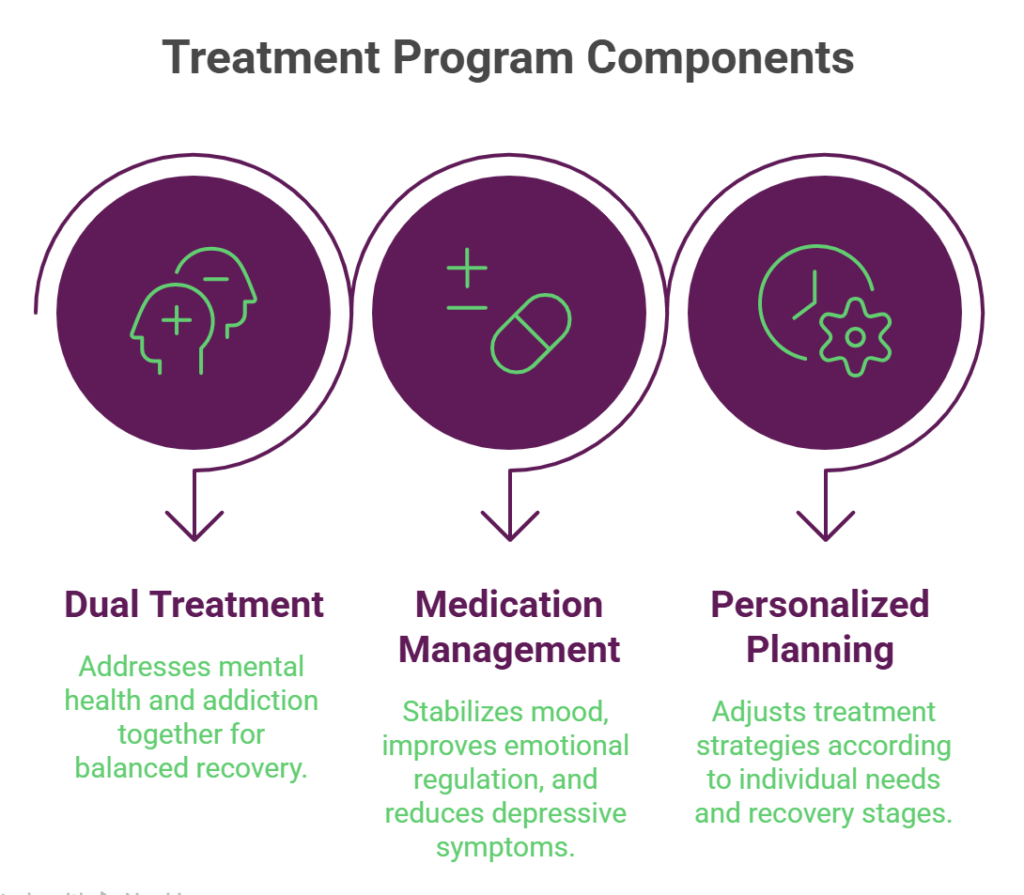
An Alpha Healing Center, a Professional mental health care, is necessary to those who have endured persistent symptoms of depression. These most effective methods are integrated treatment approaches that are based on the combination of addiction and depression treatment. Here the dual diagnosis recovery support plays a very important role.
A comprehensive strategy will help in treating mental health symptoms as opposed to addiction. If needed, medicines can help balance mood and improve emotions. Professional guidance makes sure that the treatment plans should be adjusted to separate needs and recovery phases.
Building Emotional Resilience Over Time
The healing time is gradual and the emotional healing is time-consuming. Emotional regulation is another skill that can be learned to overcome stress and disappointments without being too overwhelmed. Meditations, journaling, and relaxation are excellent coping mechanisms to emotional swings.
It is also important to develop self-compassion. Most people during recovery have problems with guilt of the previous behaviors. Self-judgment is a critical element to release in the process of addiction recovery; hence, emotional recovery and mitigating the impacts of depression should be based on progress.
Preventing Relapse Through Emotional Awareness
One of the most dominant emotional factors that cause relapse is depression. Being able to identify the emotional red flags would enable a person to seek assistance before the cravings become stronger. Emotional awareness enhances the relapses prevention strategies and ensures long-term stability.
Recovery communities, follow-up therapy, and frequent mental health check-ins minimize relapses. Powerful long-term recovery assistance assists people to be emotionally grounded and goal oriented.
Living a Balanced Life After Addiction
The recovery will provide the chance to reinvent a more healthy lifestyle and a more resilient emotional background. Depression might come along the way during the recovery, but is not characteristic of the journey. Through proper management people can be brought back to emotional sanity and purpose can be re-acquainted.
Being able to talk about depression as an addict recover openly and proactively is a strength to bridge oneself with future confidence. The process of healing is not merely the one of abstinence but the principle of the achievement of emotional balance and stability, as well as accomplishment.
The Importance of Ongoing Support
The process of recovery is not terminated by the termination of treatment. Emotional difficulties may come in various stages therefore continuous care is important. Ongoing counseling, peer involvement, and dual diagnosis recovery services are an assurance that one is taken care of when he/she needs it the most.
Experts from Alpha Healing Center can build emotional resiliency and assist a person to cope with life changes without the support of substances for long-term. In cases of depression, it is important to be patient, committed and treat the situation with proper care, because once it is treated, it becomes part of recovery and not a hindrance.
Moving Forward With Confidence in Recovery
One of the most typical yet controllable aspects of the post-addiction healing process is depression. The fact that one undergoes emotional lows and is not recovering is not true, but the body and brain are learning to cope without the substances. Early recognition of symptoms, pursuing the appropriate care, and maintaining access to support systems can prove to be significant.
A sensitive approach to depression in addiction recovery should be handled with a lot of patience and an appropriate guide that will enable such people to develop emotional strength and stability. Experts from the Alpha healing center can guide the individual in a good manner. The regular attention, good habits, and expert assistance will allow recovery to be more balanced and sustainable. The concept of healing is not limited to substance-free status and having your emotions and living a meaningful life.
Frequently Asked Questions
Is it normal to be depressed with the process of addiction recovery?
Yes, it is normal to be depressed in the process of recovery. The brain takes time to recover once a person has used substances and emotional symptoms may come as part and parcel of the adaptation process. These symptoms can be improved with proper care and support.
What is the duration of depression in addiction recovery?
The time taken is different to the individuals. A few of them develop short-term symptoms, whereas others might require long-term care. Severity reduction and long term recovery support can be used to prevent relapse and in order to reduce the severity.
At which point do you think professional assistance is important?
In case the depressive symptoms persist over several weeks, disrupt everyday life, or cause a higher craving, then professional care is highly advised. Dual diagnosis can be treated and recovered using integrated treatment and mental health in the recovery.