

Treatment of bipolar disorder may be difficult, particularly when the person is drawn in by the urge to self-medicate as he or she experiences mood fluctuations, emotional, and stress. Bipolar disorder addiction prevention is an important field of focus since bipolar disorder patients are much more vulnerable to substance misuse than the general population. At Alpha Healing Center, we lay stress on evidence based integrated approaches that help to ensure mental stability without dependence on substances.
The present guide discusses why the risk of addiction is greater in the case of bipolar disorder, how substance use aggravates the symptoms, and what are the practical steps to prevent substance abuse in the long term and maintain emotional balance.
The Interconnection between Bipolar Disorder and Substance Use
The bipolar disorder can be described as alternating between manic episodes, hypomania episodes, and depression. Manic episodes can also cause people to become invincible, impulsive or motivated to do risky things. Depression, however, is associated with hopelessness, exhaustion and emotional distress.
The sudden mood swings tend to offer an urge to gain some fast remedy. The cause of alcohol and drugs abuse or prescription abuse may be seen as an easy deviation to soothing racing thoughts or avoiding the lows of emotion. But in most cases this is a temporary reprieve which may cause long term damage.
The case study continues to indicate that there is a close relationship between bipolar disorder and substance misuse. This overlap makes the symptoms more severe, difficult to treat and increases the chances of relapse. It is this reason why bipolar disorder addiction prevention should start at an early age and should be an integral component of the treatment plan.
Risk of addiction in Bipolar Disorder: Why it is Higher
Various biological, psychological, as well as social factors determine the addiction risk of bipolar disorder:
- The weaknesses in the brain chemistry on dopamine and reward pathways.
- Manic episodes of impulsivity, which result in experimentation or overuse.
- Suffering of emotions in depressive episodes, growing dependence on substances.
- Restlessness of mind, which drugs can momentarily conceal.
- Anxiety or trauma, which worsens coping issues.
Substance use may easily develop into dependency without a well-organized support, complicating the process of mood stabilization in the long term.
The Effect of Substance Use in Exacerbating Bipolar
Although the substances may seem beneficial in the beginning, they tend to deepen the symptoms of bipolar:
- Depressive episodes may be aggravated by alcohol and depressants.
- The stimulants can cause mania or quick cycling.
- Use of the substance disrupts mood-stabilizing drugs.
- Higher relapse rate and risk of hospitalization.
- Increased risk of self-injury or suicidal thought.
Good substance abuse prevention aims at dealing with causal factors of substance use and not just eliminating the behavior.
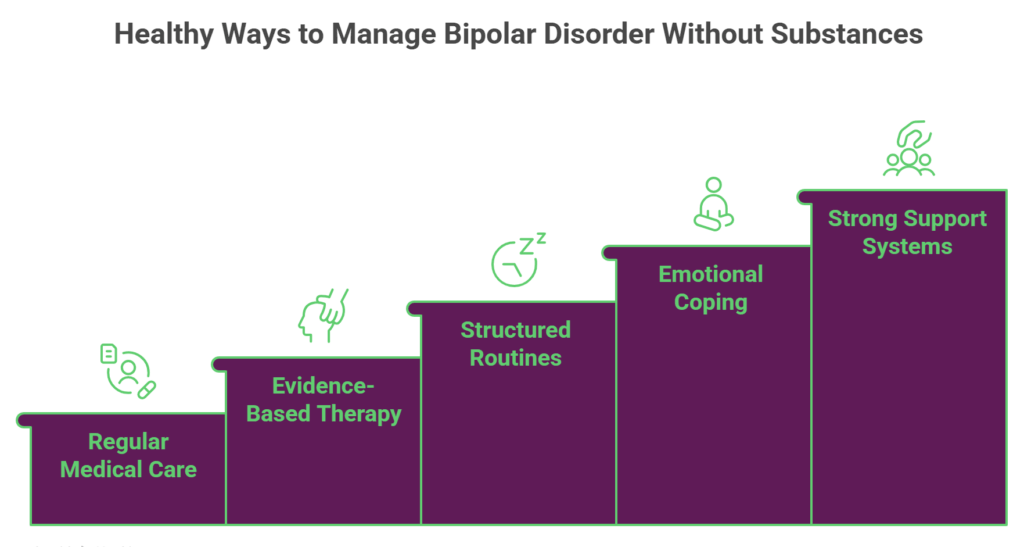
Healthy Ways to Manage Bipolar Disorder Without Substances
Regular Medical Care
The basics of medication adherence are there. These are mood stabilizers, antipsychotics or antidepressants (when closely monitored) to normalize the chemistry of the brain. Missed or changed medication is likely to trigger more cravings and emotional instability. At Alpha Healing Center, the treatment plans are strictly monitored and modified to make them the best in controlling the symptoms without the use of substances.
Evidence Based Therapy
Psychotherapy is very important in bipolar disorder addiction prevention:
- Cognitive Behavioral Therapy (CBT ) aids in recognizing triggers and substituting substance-seeking behavior.
- Dialectical Behavior Therapy (DBT) enhances the control of emotion and impulse control.
- Psychoeducation enables people to know the early warning signs.
Therapy offers a useful need to deal with distress in healthier manners.
Structured Daily Routines
Things are more stable in a fluctuating condition through routine. Consistent sleeping, eating and exercising routines minimize mood swings and decrease the desire to self-medicate.
Simple consistency may considerably minimize the addiction risk in bipolar disorder.
Emotional Coping and Stress Management
It is necessary to learn to cope with stress:
- Mindfulness and meditation
- Anxiety breathing techniques
- Exercise in order to relieve emotional stress
- Journaling to track moods and triggers
These competencies serve as substance abuse prevention in the long term by enhancing emotional capacity.
Strong Support Systems
Loneliness makes one more vulnerable to addiction. There is accountability and emotional safety generated through family involvement, peer support groups and professional guidance. Family education and group therapy are incorporated into the recovery planning of Alpha Healing Center.
Integrated Care: The Key to Long‑Term Stability
Bipolar disorder addiction prevention should not be treated together as they are likely to relapse. Integrated care addresses two at the same time, making mood stabilization and substance abuse prevention mutually support one another. This systematic approach enhances treatment compliance and emotional regulation and quality of life.
Indications of When to seek professional help
You need to be supported professionally in case you observe:
- Growing compulsions to consume substances on mood swings
- Lack of control over stress as a result of drugs or alcohol addiction
- Repeated mood relapses or drug adherence.
- Declining relationships or job performance.
How Alpha Healing Center Supports Bipolar Disorder Addiction Prevention
Alpha Healing Center is a center that deals in mental and addiction care that is combined. Our programs focus on:
- Individualized treatment plans of bipolar disorder.
- Dual-diagnosis expertise
- Evidence-based treatment and medication control.
- Prolonged relapse prevention programs.
- Empathic, secretive care.
We aim at having a sustainable recovery and not being dependent on the substances.
Conclusion
Bipolar disorder can be managed without recourse to substances and this can be achieved with proper support, structure and treatment regimen. The focus on bipolar disorder addiction prevention will help to become emotionally stable with healthy coping skills and will be cured in the long run.
If you or a loved one needs integrated care, Alpha Healing Center is here to guide you toward a balanced, substance‑free life.
FAQs
What is the way of managing bipolar disorder without drug addiction?
With correct medication, therapy, organization of lifestyle as well as support, bipolar disorder can be easily managed successfully without the need to use substances. Holistic care is a significant contributor to mental stability and functional survival.
What are the treatment interventions that prevent addiction of bipolar disorders?
Cognitive Behavior Therapy, Dialectical Behavior Therapy, psycho education and relapse-prevention therapy help a patient to manage with triggers, emotions and avoid substance dependence.
What is the role of daily routine in the prevention of substance abuse?
The frequent sleep, food and daily activities in life balance the mood swings, reduce the emotional instability, and reduce the measures of impulsiveness which in most instances leads to drug abuse.
Is there a reduction in addiction risk of bipolar disorder under family support?
Yes. Family involvement improves accountability, adherence to medicine, emotional behavior, and early recognition of relapse indications, and they are all likely to prevent substance abuse.