


The Importance of Therapy in Addiction and Mental Health Treatment
Addiction rarely occurs in isolation and it is often accompanied by other mental health conditions. Many people who suffer from this condition also experience depression, anxiety, post-traumatic stress disorder (PTSD) bipolar disorder, and personality disorders. The medical field uses dual diagnosis treatment to describe this combination of conditions, which also extends to co-occurring disorders. Traditional treatment methods fail to address all aspects of addiction because they select substance abuse as their main focus while ignoring the psychological reasons why people develop this condition. The method results in fragmented treatment because it leads to patients experiencing multiple issues, which include relapse and emotional instability, and they fail to achieve complete recovery.
An integrated treatment approach that addresses both therapy addiction mental health simultaneously has become the gold standard in recovery. The mental health treatment of therapy addiction needs to be approached through this method. Through substance abuse counseling people achieve emotional healing which enables them to recover from addiction by learning about their conduct patterns, their emotional handling skills and their construction of fresh coping methods.
The Alpha Healing Center provides dual diagnosis treatment through its compassionate and complete treatment method which delivers specialized treatment to meet the psychological and addiction needs of each patient.
Understanding Dual Diagnosis: The Intersection of Addiction and Mental Health
Dual diagnosis refers to the simultaneous presence of a substance use disorder and a mental health disorder in an individual. People commonly underestimate how often this combination occurs. Research from the National Institute on Drug Abuse reports that 50 percent of people with mental illness will develop a substance use disorder at some point in their lives and 50 percent of people with substance use disorder will develop mental illness during their lifetime.
The relationship between addiction and mental health exists in two directions. People who have mental health disorders use drugs or alcohol to self-medicate their symptoms while people who abuse substances for extended periods develop new mental health disorders or experience worsening of their existing conditions. The circular process requires treatment of both disorders at the same time to achieve successful and permanent recovery results.
Why Dual Diagnosis Treatment is Essential
The risk of relapse increases substantially when therapy addiction mental health disorders remain untreated. A person who completes a rehabilitation program will achieve initial success, but their unresolved emotional problems will lead them back to drug use as a coping mechanism. A successful dual diagnosis treatment program needs to treat both addiction and mental health disorders through its combination of medication and therapy for addiction and mental health and substance abuse counseling.
Integrated treatment processes assist people with recovery work through the combined treatment of their addiction problems and their existing mental health conditions. The complete method enables people to develop self-understanding and emotional resilience while learning to use better methods for enduring transformation.
How Integrated Treatment Helps Individuals:
- Understand the root causes of their addiction
- Develop emotional awareness
- Build resilience against stress and triggers
- Reduce dependency on substances for emotional relief
The integrated holistic approach creates an improved foundation for long-term recovery which supports emotional stability and mental well-being together with continuous sobriety maintenance and Substance abuse counseling
How Therapy Plays a Key Role in Addiction Recovery
The most effective treatment method for coexisting with therapy addiction mental health disorders requires its main component. The program provides a protected space where people can investigate their internal mental states and emotional reactions and their patterns of conduct. The treatment programs for addiction and mental health disorders which use therapy as their main method, help patients understand their initial reasons for using drugs instead of only teaching them to stop using drugs.
Types of Therapy Used in Treating Addiction with Mental Health Issues
Cognitive Behavioral Therapy (CBT)
Research demonstrates that Cognitive Behavioral Therapy (CBT) functions as the most effective treatment method for addiction according to its status as a widely used therapeutic approach. The primary objective requires individuals to identify their negative thought patterns which lead them to self-destructive and harmful behaviors.
Motivational Interviewing (MI)
The therapy of Motivational Interviewing which centers on patients enables them to discover their personal motivations for achieving and maintaining sobriety which they need to control their recovery process. The therapist establishes a framework which enables the patient to explore their personal reasons for wanting to quit drug use instead of adopting direct methods to achieve recovery.
Trauma-Informed Therapy
Those who develop therapy addiction mental health issues have generally experienced traumatic events in their lives such as childhood abuse and domestic violence, accidents, and the loss of loved ones. The treatment approach that is in line with trauma, informed principles educates individuals on the ways in which their past traumatic experiences influence their current behavior and at the same time offers them a safe space to delve into their life experiences.
Group Therapy & Peer Support
The process of group therapy helps people create social bonds which they need for their recovery process. When people share their experiences with those who have gone through similar challenges they find relief from feelings of shame and isolation.
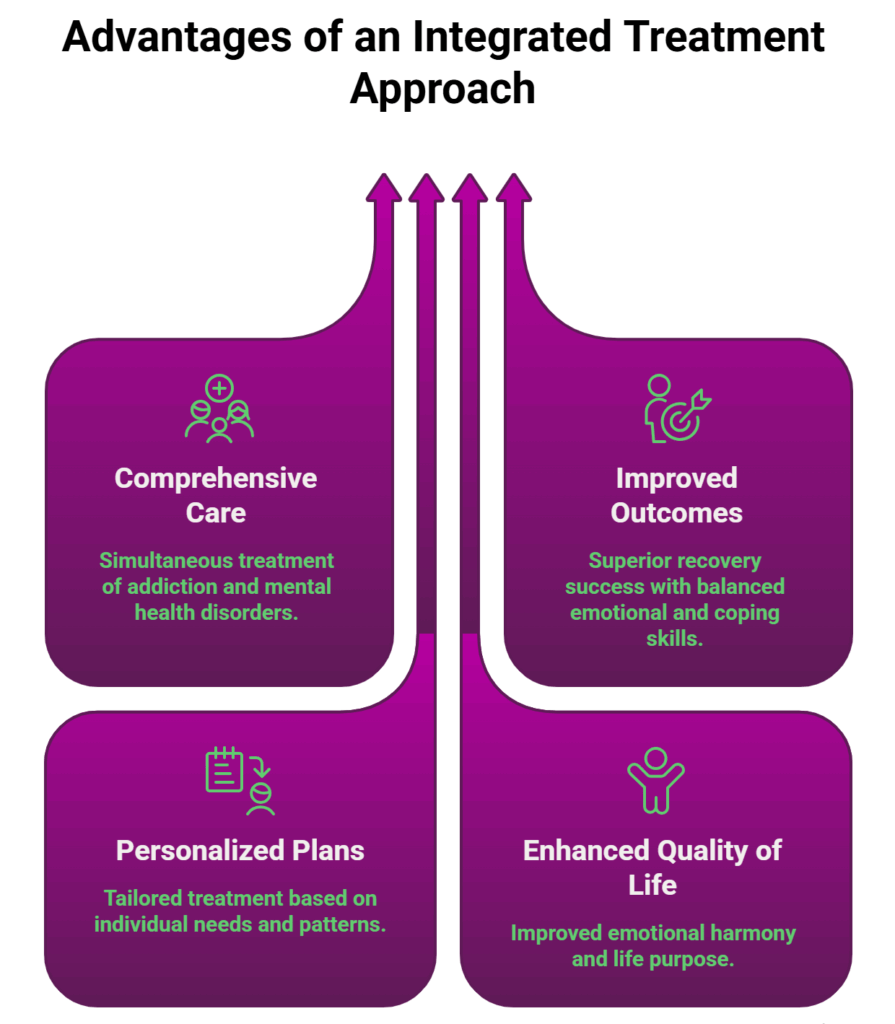
Advantages of an Integrated Treatment Approach
The combined methods which address both therapy addiction mental health disorders provides a complete treatment system which enables individuals to achieve recovery. The unified treatment of both issues provides a person with complete care which supports their healing process for an extended period.
Comprehensive Care:
The combined treatment would be the continued simultaneous treatment of addiction and mental health disorders instead of separate treatments. The coordinated approach uses health care services together with psychological therapy and counseling and behavior modification techniques so professionals can treat both drug use and mental health disorders which exist together in patients.
Improved Outcomes:
The combination of therapy addiction mental health produces superior recovery success. The method helps individuals maintain sobriety while they achieve better emotional balance and develop improved coping abilities. The approach helps individuals maintain their recovery progress while their mental health improves and their personal development strengthens which they need to establish a successful life path.
Personalized Treatment Plans:
Integrated treatment enables therapists to develop personalized treatment programs based on each person’s specific background and mental health needs and their patterns of addiction. The customized plan will include therapy and counseling and medication management and holistic healing and behavioral support to achieve better recovery results.
Enhanced Quality of Life:
When both therapy addiction mental health challenges are tackled together, people see major changes in their emotional harmony, connections with others, and general happiness in life. People learn multiple self-expression techniques which help them handle their emotions while developing self-awareness and discovering new life purposes that lead to healthier and happier lives outside their recovery period.
Alpha Healing Center: A Beacon of Integrated Recovery
Alpha Healing Center is a haven for healing, transformation, and rebirth for those battling addiction and mental health issues. We are not only a rehab center but also a convergence point of science and heart, where recovery is synonymous with dignity.
Alpha Healing Center is a world-class provider of comprehensive addiction treatment. It is a hybrid of modern clinical therapy and a calm, caring environment. Our team comprises outstanding psychiatrists, psychologists, addiction therapists, and wellness professionals who have developed uniquely personalized therapy plans that respond to the emotional, psychological, and physical demands of the patients.
We are dedicated to dual diagnosis treatment. We utilize evidence-based methods, trauma-sensitive care, and holistic healing practices such as mindfulness, meditation, and wellness programs. Our clients go deeper inside, heal themselves, and change their lives forever.
Benefits of Therapy in Long-Term Addiction Recovery
Therapy provides multiple advantages to individuals who are recovering from addiction and have simultaneous mental health disorders. Some key advantages include
Reduced Risk of Relapse
Substance abuse counseling allows individuals to develop coping mechanisms to manage their life circumstances while helping them gain an understanding of their deeply seated emotional wounds.
Improved Emotional Stability
Therapy helps people learn to control feelings by channeling them earnestly—be it anger, sorrow, or anxiety.
Better Relationships
Therapies with family and interpersonal skill development enable individuals to learn effective communication techniques, which help them restore trust with their family members.
Stronger Coping Skills
Patients receive training in dealing addiction and mental health undergoes stress, peer pressure, and life stresses without turning to the negative side of substances.
Conclusion
Therapy plays a vital part in the treatment of addiction along with co-occurring mental health issues. Addiction mental health programs that focus on both the psychological and behavioral aspects of addiction give the patient the necessary tools to recover, develop and reconstruct their lives.
An individual who needs to recover from drug addiction and mental health problems must first obtain professional assistance. The Alpha Healing Center offers dual diagnosis treatment, which combines medical treatment with evidence-based therapy and holistic healing practices to provide compassionate care.
Frequently Asked Questions (FAQs)
What is therapy addiction and mental health treatment?
Therapy for addiction and mental health treatment is an integrated approach that addresses both substance use disorders and co-occurring mental health conditions simultaneously through counseling, behavioral therapy, and holistic care.
Why is therapy important in addiction recovery?
Therapy helps individuals understand the root causes of their addiction, manage emotions, change harmful thought patterns, and develop healthy coping strategies to maintain long-term sobriety.
Can someone recover fully with therapy addiction mental health programs?
Yes. With the right combination of medical care, therapy, counseling, and holistic support, individuals can achieve lasting recovery and improved emotional well-being.
Can Substance abuse counseling prevent relapse?
Yes. Through continuous guidance, coping skill development, and emotional regulation technique, significantly reduces the risk of relapse.