



Attention Deficit Hyperactivity Disorder (ADHD) is a neurodevelopment disorder that impairs attention, focus, and impulse control. ADHD that is associated with substance use gives complicated problems in diagnosis and treatment. People having ADHD substance abuse are prone to impulsivity, emotional control, which puts them at risk of drinking, taking nicotine, or drug abuse. ADHD symptoms have to be checked through early diagnosis, systematic therapy and professional assistance to make sure that the drug addiction does not get out of control. The knowledge of the interaction between ADHD and substance use enables experts to formulate customized intervention initiatives that enable recovery, enhance mental wellness, and promote long-term well-being. At Alpha Healing Center, Assessment of the neurological and behavioral needs is done together with proper evaluation that constitutes a comprehensive and long-term treatment plan.
How ADHD Contributes to Substance Abuse
It is demonstrated that ADHD causes people to consume substances due to impulsivity, the tendency to take risks, and the inability to cope with stress. When an individual experiences frustration, anxiety, or even emotional distress, he/she can turn to drugs in order to temporarily relieve them, although, in the vast majority of instances, this results in the further increase of attention deficits and behavioral instability. Through organized ADHD recovery programs, a person can identify triggers and learn coping skills that reduce their reliance on substances. The programs include exercises on skill building, behavioral therapy and mental health education to increase focus, emotional control and choices. By engaging in ADHD management and substance use prevention, with the time, people will start slowly substituting their negative behavior with positive and productive behaviors.
Relaxation through structured programs will promote consistency and accountability to ensure long term behavior change. The emotional awareness is enhanced so that the patients can react to the stresses in a reasonable manner rather than reacting impulsively and the craving to use substances. In the long run, these interventions develop resilience, improved social functioning, and lower chances of relapse. Experts at our Alpha Healing Center, insist on the slow development of skills so that patients learn to apply coping mechanisms that can facilitate recovery in the long term. The method will make ADHD substance abuse treatment safer, more effective, and sustainable, especially in conjunction with mental health assistance and continuous monitoring.
Mental Health and ADHD Addiction
Mental health is also a critical point to handling substance abuse of ADHD. ADHD is usually accompanied by anxiety, depression or emotional dysregulation, which raises the risk of substance misuse. Mental Health and ADHD Addiction is an area of specialization that professionals specialize in by offering counseling, coping skills, and stress management techniques that enable people to go through their emotional difficulties without any harm. Therapeutic support helps the patients to learn how to recognize triggers, deal with impulsive nature, and substitute harmful behaviours with healthier ones.
Care of the body, mind, needs to be coordinated to avert mental health and deal with ADHD. Emphasizing on the emotional aspect and behavioral therapy assists in decreasing the relapse and aids in long-term attendance of the recovery programs. Patients develop confidence, strength, and clear minds and this enables them stick to the treatment plans. Combining several mental health problems will enhance healing and ensure a holistic response to sustained wellness.
Strategies for Managing ADHD Substance Abuse
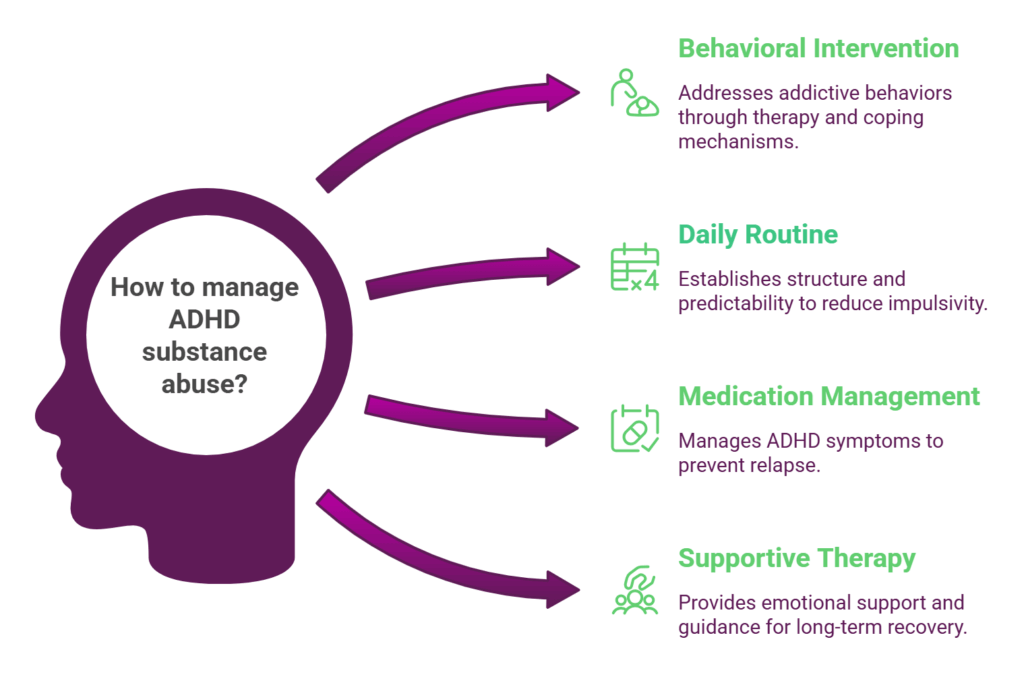
ADHD substance abuse can only be successfully treated in case it is dealt with in a combination of behavioral intervention, daily routine, medication management where necessary, and supportive therapy. The greatest thing of preventing relapse is to recognize the high risk situations and establish coping mechanisms. Some of the mindfulness-based practices which specialists rely on to strengthen the decision-making process and emotional regulation include mindfulness exercises, reflective journaling, and therapeutic mentorship.
Personalized ADHD treatment plans offered by Alpha Healing Center, help patients address both attention difficulties and addictive behaviors at the same time. With the help of organised instructions, developing skills, and constant observation, people gain resilience, self-awareness, and self-confidence. The integration of these strategies will minimize impulsivity, encourage positive coping mechanisms, and assist patients to remain long-term recovery and manage ADHD successfully.
Long-Term Recovery and Support Systems
The ADHD substance abuse recovery depends on the efforts of continuous support provided by Alpha Healing Center in the form of follow up counseling, peer support and the structured rehabilitation programs . The recovery programs for ADHD offer continuous support that strengthens the emotional regulation, decision-making, and focus of the individuals to manage daily life occurrences without indulging their substance use. Parental engagement, community support and therapeutic mentorship make accountability stronger and brings about consistency.
In the long term, the programs promote healthy lifestyle, emotional stability, and better social performance. Regular routines and availability of professional support minimises the risks of relapse and enable individuals to receive long-term wellness. The integration of continuous mental health care would enable the patients to be able to cope with the symptoms of ADHD at the same time as they maintain sobriety and enhance the quality of their lives.
Early Intervention and Prevention
Timely identification of the symptoms of ADHD, as well as preventive monitoring of substance use, has a very good effect on the recovery process. Early intervention in therapy and medication care coupled with behavioral counseling will help to avoid a progression into severe addiction. The structured ADHD recovery plans are aimed and provided by Alpha Healing Center to point out the warning signs and provide the people with adaptive coping skills. This will be supplemented by continuous mental health care, which will allow addressing the emotional and behavioral issues in time.
The Preventive approach enhances greater control of self, emotional stability, and feedback. Patients are taught to control triggers, adhere to routine schedules and to avoid impulsive reactions. Mental health and behavior issues should be treated early, as ADHD and substance abuse care works better, lasts longer, lowers risks, and helps patients steadily reach recovery goals.
Integrating Mental Health and Clinical Care
The problem of ADHD and substance abuse should be treated through combined clinical care that involves therapy, psychiatric examination, and prescription of medications. Treatment of the ADHD disorder should be organized with the addiction policy where the attention deficits, hyperactivity, and impulsivity are treated in alongside with the substance related behavior. Frequent reviews, therapeutic advice, and treatment plans make sure progress is regular.
Mental health support helps people cope better, lowers stress, and improves following therapy. This two-way approach boosts emotional well-being, resilience, and self-control. ADHD and substance abuse treatment works best when coordinated, helping patients develop life skills, regain focus, and maintain sobriety.
Building a Supportive Environment
Alpha Healing Center has an structured and enabling environment enhances the recovery process of ADHD substance abuse. Emotional resilience, accountability and healthy decision-making are reinforced by positive family, peer, and experts interactions. Isolation is minimized, motivation increased through group therapy, mentorship programs and involvement in community activities.
Adding Mental Health and ADHD Addiction initiative strategies educates how to respond in an adaptive manner to environmental stimuli and emotional stress. Positive environments and well-organized ADHD recovery programs increase motivation and commitment to treatment programs. This is a conducive environment that consolidates long-term success in treatment of ADHD and substance use at the same time.
Achieving Long-Term Recovery from ADHD and Substance Abuse
ADHD recovery programs, disorder treatment, and mental health support need to work together for long-lasting recovery from ADHD and substance abuse. Early intervention, structured routines, coping strategies, and professional guidance improve therapy adherence, reduce relapse risk, and support overall well-being. Treating ADHD symptoms alongside substance use helps patients control impulses, build resilience, and live healthier lives. Ongoing encouragement and supervision strengthen emotional control and behavior, creating a strong foundation for long-term success.
FAQs
1. What does it mean that people with ADHD are more likely to abuse substances?
ADHD individuals tend to have impulsive tendencies, emotional problems and can take risks; this may result in ADHD substance abuse. These risks are minimized through the use of structured recovery programs and coping strategies and increased healthier behaviors.
2. Which treatments are effective in the treatment of ADHD and substance abuse?
As a good intervention, there are behavioral therapy, medication administration, routines and plans to manage ADHD disorder. All of these strategies treat the symptoms of ADHD and addictive behaviors at the same time, enhancing the recovery outcomes.
3. What is the role of mental health support in the recovery of ADHD addiction?
At Alpha Healing Center, Mental Health and ADHD Addiction Focus Assistance allows individuals to cope with stress, anxiety, and depression that could cause the usage of substances. Counseling, therapy, and skill-building enhance resilience, decrease the risk of relapse, and increase the use of recovery programs.