
Bipolar Disorder: Symptoms and Treatment
Bipolar disorder is a treatable condition, but it is often misunderstood and sometimes misdiagnosed. This guide explains what it is, how its types differ, what can set off mood episodes, and which treatments have the strongest evidence.
1. What Is Bipolar Disorder?
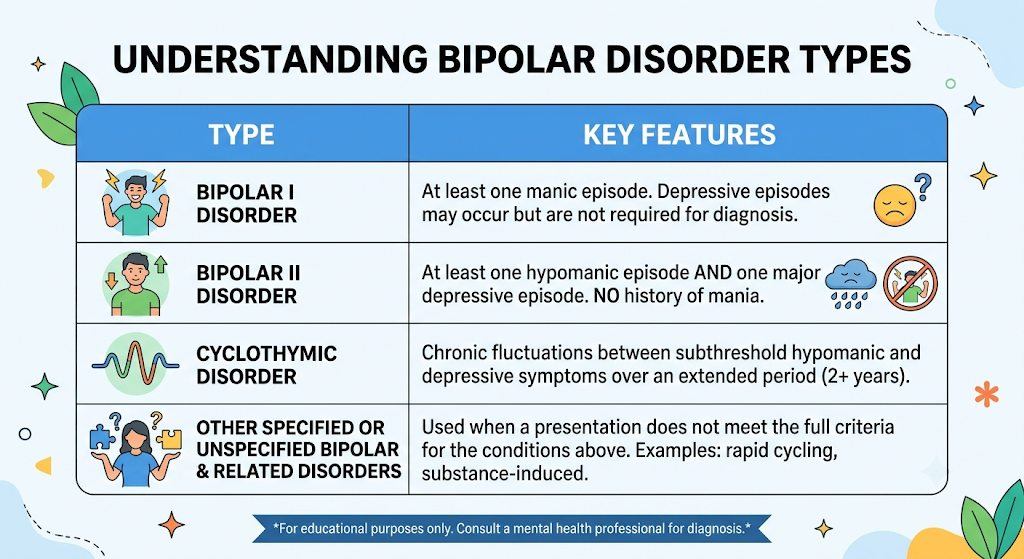
Bipolar disorder is a mood disorder characterized by episodes of mania or hypomania and, in many people, major depression. The two poles look very different.
Mania involves an abnormally elevated, expansive or irritable mood, along with:
- Increased energy
- Reduced need for sleep
- Pressured speech
- Grandiosity
- Racing thoughts
- Risky behavior
Mania causes marked impairment and may involve psychosis or require hospitalization.
Hypomania Hypomania involves a similar change in mood and energy, but without the marked impairment or psychosis that characterize mania.
Depressive episodes Depression involves persistent low mood or anhedonia (loss of interest or pleasure), together with associated cognitive and physical symptoms.
Why accurate differentiation matters: antidepressant monotherapy (an antidepressant used on its own) may destabilize bipolar I disorder, so telling bipolar depression apart from ordinary depression is essential.
Types of Bipolar DisorderConditions that can look similar
Clinicians also need to tell bipolar disorder apart from:
- Unipolar depression
- Substance-induced mood symptoms
- ADHD
- Borderline personality disorder
Diagnostic errors can lead to ineffective or even destabilizing treatment, which is why a careful assessment matters.
Causes and Triggers
What causes bipolar disorder?
Bipolar disorder is associated with substantial genetic heritability and with alterations in the brain systems involved in:
- Mood regulation
- Reward processing
- Circadian rhythms
- Emotional salience
Environmental factors can interact with this biological vulnerability.
What triggers mood episodes?
In susceptible people, the following may precipitate or worsen an episode:
- Sleep deprivation
- Irregular routines
- Psychosocial stress
- Substance use
- Antidepressant-associated mood switching
Important: triggers are not the same as underlying causes. A trigger can set off an episode, but it does not explain why someone has the condition.
Prevention strategies
Management involves both medication and prevention. Key strategies include:
- Sleep regularity: keep consistent sleep and wake times
- Psychoeducation: learning about the illness and how it behaves
- Early identification of prodromal symptoms: spotting the first signs of a relapse
- Family involvement: support from people close to you
Early warning signs to watch for
- Progressively reduced need for sleep
- Increased goal-directed activity
- Escalating impulsivity
Recognizing these signs early makes timely intervention possible.
The Best Treatment for Bipolar Disorder
There is no single best treatment for everyone. The right plan depends on:
- The phase of illness
- Previous response to treatment
- Adverse effect profile
- Comorbidities
- Patient preference
Acute mania and relapse prevention
Lithium and selected antipsychotics are important treatments for both acute mania and preventing relapse.
Bipolar depression
Evidence-supported options, depending on the patient and applicable guidelines, include:
- Quetiapine
- Lurasidone
- Cariprazine
- The olanzapine-fluoxetine combination
Lamotrigine
Lamotrigine has an important role in selected patients, particularly for preventing depressive relapse. It requires slow titration (gradually increasing the dose).
A key safety point
Antidepressants should not be used alone in bipolar I depression.
Newer developments
Newer developments include additional formulations and newer antipsychotic agents, although availability and approved indications vary by country.
In India, the 2025 Indian Psychiatric Society Guideline, published in 2026, provides updated phase-specific recommendations for bipolar I and II disorders.
If you or someone you know has had periods of unusually high energy, very little need for sleep, or deep low moods, speak with a psychiatrist or mental health professional. An accurate diagnosis is the first step toward effective treatment, and with the right plan, people with bipolar disorder can live stable, fulfilling lives. This article is for general information and is not a substitute for professional medical advice.