



Addiction recovery involves emotional, mental, and behavioral change that requires consistency, structure, and professional guidance to be effectively managed. Recovery becomes more difficult when depression exists along with substance dependence, because emotional exhaustion, hopelessness, and low self-esteem can quietly weaken a person’s motivation. Most people come to treatment without fully understanding that their emotional state determines the level to which they will participate, exercise discipline and be motivated in the long term. Alpha Healing Center focuses on the early psychological assessment, such that mood related issues are resolve at an early stage before they transform into long term difficulties. A respectful and clinically safe environment builds openness, accountability and emotional comfort. Depression Addiction Recovery becomes more effective when mental health is treated with the same importance as physical detox, allowing individuals to grow with clarity, emotional stability, and confidence instead of uncertainty or hesitation. Stable emotional controls and professional support can also be used to make the person regain self-trust which is paramount in maintaining focus and attaining measurable milestones of rehabilitation.
Psychological Relationship between Addiction and Depression
There is often an interconnection between depression and addiction since they influence interconnected neurological systems associated with, impulse control and stress response. People who are emotionally hurt, traumatized, or empty over the long term will accidentally find situational relief by using substances, which become more distressing as time goes on. Alpha Healing Center may overcome this tendency with the help of systematic Substance Abuse Counseling that will enable people to be conscious of the view of emotions triggers and behavioral responses in a clinical perspective. The therapeutic counseling enables the individuals to develop responsibility, self-awareness and good judgment that is used to substitute impulsive habits with positive behavior. Emotional understanding is also good to develop confidence and to be contribe in therapy sessions. This insight on the metal health is a very important aspect of the Depression Addiction Recovery process because the recognition of internal emotional patterns will strengthen discipline, reduce avoidance behaviour, and create strength of the mind which will create long lasting healing impact. As a person continues to develop, s/he learns to identify emotional cues and react in a responsible way that aims at long-term gains and not short-term benefits.
Affective Obstacles Retarding Rehabilitation
Depression comes with hidden emotional obstacles that may slow down the recovery even where medical resources of a high standard are available. Guilt, shame, withdrawal, low self-worth often limit the engagement in the therapy and decrease motivation. Alpha Healing Center adopts individualized Depression Therapy Programs that restore confidence using psychotherapy, guided reflection and emotional regulation programs. Supportive communication enables people to experience empathy instead of being criticized and rebuild hope and confidence in the treatment process over time. Accountability and self-belief are enhanced by emotional validation through clinical expertise. Depression Addiction Recovery is more stable when emotional pain is not dealt with but with the help of specialized therapeutic care, people can recover inner strength, become more involved in it, and acquire a healthier self-image. Once the confidence is high, people will start to participate more in counseling sessions and daily wellness routines which will support consistency, and will support long-term mental stability.
Cognitive and Physical Effects on Treatment Outcomes
Depression is not only an issue of emotional well-being; it also affects the concentration levels, sleeping cycle, eating habits and physical well-being. Mental confusion, persistent exhaustion, and broken sleep patterns can be a major barrier to the discipline of learning therapeutic knowledge or observing systematic practices in an individual. Alpha Healing Center addresses these challenges with coordinated wellness plans supported by clinically guided Relapse Prevention Strategies to help individuals build adaptive coping skills and manage their emotions effectively. Medical control, nutrition, restful sleep habits, and supervised physical exercises are all inputs that stabilize the neurological functions and enhance the energy levels. Depression Addiction Recovery is more reliable in mental clarity and physical endurance develop in parallel, and one can attend the counseling sessions and structured programs regularly. Improved focus and physical strength boost determination, helping patients follow therapy instructions consistently and maintain progress through all stages of rehabilitation without emotional exhaustion or mental fatigue.
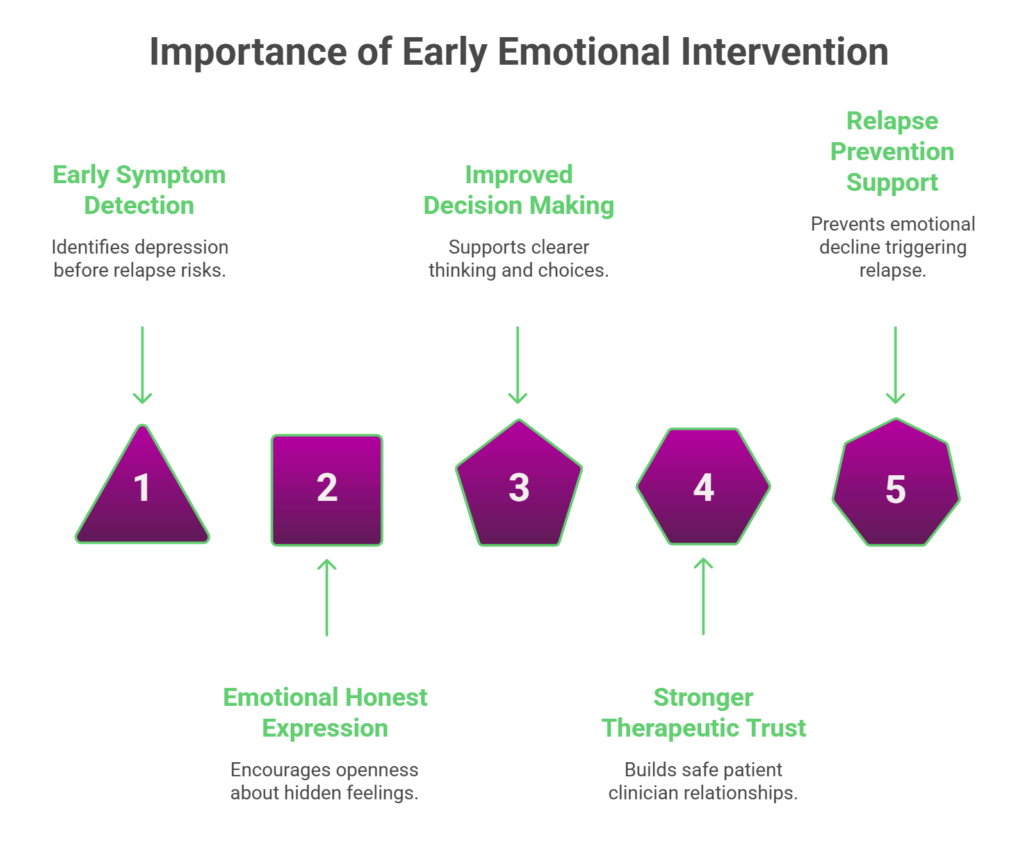
Importance of Early Emotional Intervention
Timely emotional guidance is very important in enhancing recovery since the depressive symptoms may silently weaken recovery efforts before any warning signs are manifested. People might seem to be physically healthy but internally they are depressed, not attached, unmotivated. Alpha Healing Center provides proactive Substance Abuse Counseling sessions that encourage open expression of feelings and help detect psychological decline early. These guided sessions help individuals be honest about their emotions, think clearly, and make positive decisions. Therapeutic mentorship with professional reassurance lessens the fear of being vulnerable and enhances self-confidence. Depression Addiction Recovery is more effective when emotional issues are addressed early, preventing them from worsening and keeping mental health aligned with physical recovery goals. Early emotional attention enhance the development of trust between the patient and clinician as it develops into a participatory space whereby people feel safe to seek help before the problem escalates into a relapse situation.
Structured Coping and Relapse Prevention
Risks of relapse are significantly high when the depressive symptoms are left untreated or when they are pushed deep down without being attended to. Without coping skills, stressful events, interpersonal conflict or loneliness can easily cause a person to become destabilized without providing assistance. Alpha Healing Center uses advanced Relapse Prevention Strategies to provide emotional care and teach individuals how to manage triggers calmly and responsibly. Deep breathing exercises, Journaling to reflect on thoughts, Guided short breaks or pause exercises are practical activities to control the emotional responses in the situation of high risk. Regular therapy follow-ups help strengthen personal responsibility and provide ongoing support. Depression Addiction Recovery will be more sustainable in the event that people are able to develop proactive coping behaviors as opposed to reactive behaviors. Increased emotional resilience and control prevent impulsivity and prevent sobriety during short-term emotional distress. Gradually, such coping strategies will turn into everyday habits that can help keep a person in a clear state of mind, enhance their emotional stability, and make them feel confident about their ability to sustain the process of recovery.
Dual Diagnosis Care and Clinical Collaboration
Treatment of dual diagnosis should also be addressed as both addictive and depressed problems, as otherwise the progress may be too fragmented or easily triggered by emotions. The actions of treating one of the conditions and neglecting the other usually result in partial treatment. Alpha Healing Center has a multidisciplinary approach whereby psychiatrists, therapists, and wellness professionals work together using the advanced Depression Therapy Programs that are specific to an individual. Emotional balance and clinical accuracy are ensured by ongoing psychiatric assessment, the use of medication where necessary, and mentoring therapy. Clear communication, confidence, and measurable progress are supported through coordinated supervision. The recovery of addiction to depression is much more reliable when therapeutic interventions and professional monitoring dimensions are jointly addressed. This combined approach allows individuals to develop steadily with professional guidance, structured care, and regular checkups, helping build self-confidence and ensuring emotional and behavioral recovery progress together without imbalance.
Support Systems and Therapeutic Environment
The therapeutic culture is a Important factor in determining the results of emotional resilience and rehabilitation. Healing does not succeed in being alone, it succeeds where empathy, safety, and professional integrity are present concurrently. Alpha Healing Center creates a positive environment in which a person is respected, mentored, and monitored medically in the process of their healing. The group therapy, peer communicating and family counseling nurtures emotional security and lessens the isolation feelings. With the support of the organized Relapse Prevention Strategies, people are also taught to have adaptive reactions to the emotional discomfort and environmental stimuli. The presence of encouragement and accountability goes together with depression Addiction Recovery and enables patients to regain social confidence and interpersonal relationships. Emotional stability is also promoted by positive peer influence and professional mentorship that encourage individuals to stay consistent in their healthy routines and determined to reach their long-term recovery goals with consistent encouragement.
Long-Term Emotional Wellness and Aftercare Support
Recovery does not end with primary treatment but requires lifelong maintenance of emotions with the help of well-organized systems of aftercare. A long-term wellness involves lifestyle modifications, frequent counseling, and strict self-care schedules that maintain mental balance. Alpha Healing Center focuses on long-term treatment with Depression Therapy Programs enhancing the emotional maturity and clarity of thought. The continuity of care is ensured through follow-up consultations, community networks, and educational workshops following the end of the rehabilitation. The daily responsibility and awareness is supported by preventive education that is supported by professional Substance Abuse counseling. Depression Addiction Recovery eventually wins the battle when recovery is made a long-term promise under the guidance of caring supervision, coping adaptability, and frequent therapeutic enthusiasm. Such a long-term practice will enable them to be sober, restore positive relationships, and lead a healthier and more self-confident future based on emotional strength and informed self-care.
Frequently Asked Questions:
1. What are the effects of depression on addiction recovery?
Depression may slow down the process of addiction recovery by decreasing motivation, concentration and emotional stability. The emotional exhaustion, hopelessness and low self-esteem might complicate the ability of the individuals to engage actively in the therapy and has long-term recovery goals. Sustainable development requires dealing with both mental health and physical detox.
2. What are the treatments that would enhance depression in the process of addiction recovery?
Customized Depression Therapy Programs, such as psychotherapy and guided introspection exercises, emotional management exercises, and Substance Abuse Counseling, are capable of assisting people in restoring faith, building coping mechanisms, and improving their emotional stability. Wellness and planned routines also help a person to be mentally focused and regularly engage in therapy.
3. What can be done to avoid relapses among depressed and addicted individuals?
Relapse Prevention Strategies, individuals learn how to deal with triggers, control their reactions and react to stress calmly and in a controlled manner. Mindfulness exercises, journaling, therapeutic mentorship and regular follow-ups are useful towards achieving long-term sobriety and emotional endurance as well as improvement of overall recovery outcomes.