



The Link Between Addiction and Mental Health
To be an addict is a demanding endeavor. The situation becomes complicated further when mental illness is involved with substance dependence. It is a condition called dual diagnosis which needs special treatment which is not applied independently to both the problems. Dual diagnosis addiction mental illness can be described as the occurrence of a substance use disorder and a mental illness like anxiety, depression, post traumatic stress disorder, or bipolar disorder.
At Alpha Healing Center we perceive that recovery starts with the realization of this profound linkage and giving integrated, evidence based treatment that looks at the entire person. This paper discusses the nature of dual diagnosis, the reasons that make drug addiction and mental illness comorbid, and how dual diagnosis and mental illness treatment can achieve long-term recovery.
Understanding Dual Diagnosis Addiction Mental Health Illness
Dual diagnosis or co-occurring disorders is a condition that is identified when an individual is both in a substance use disorder and a mental health disorder. The interaction of these conditions enhances the symptoms, complicates the diagnosis and chances of relapse in case they are not addressed simultaneously.
Numerous individuals with an addiction do not know that they may be having an underlying mental health disorder that is motivating them to consume the drug. Similarly, mental illness can aggravate untreated addiction and generate a vicious, Reinforcing cycle. This is the reason why mental health and addiction recovery programs need to be incorporated and well coordinated.
What Is Dual Diagnosis?
Dual diagnosis is not an isolated disease. As a matter of fact, it has always been observed that persons with mental health disorders are highly prone to substance use disorders and vice versa.
Against the classic method of treatment, which considers the issue of addiction and the issue of mental illness as Unique, dual diagnosis addiction mental illness care is based on the concomitant treatment. Addressing only addiction without treatment of the mental health symptoms will be subject to relapse and addressing mental illness alone may not be effective when the individual is using substances.
Effective dual diagnosis treatment acknowledges both conditions as having an effect on one another and they should be addressed as interdependent components to a recovery process.
Common Mental Illnesses Associated with Addiction
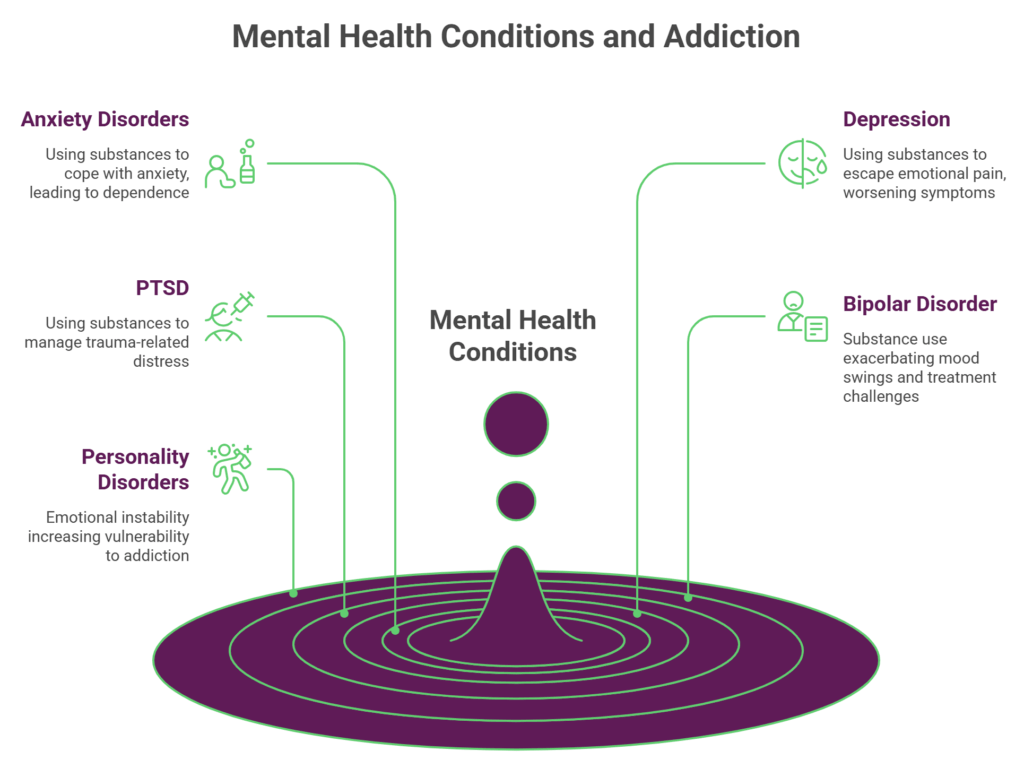
There are a number of related mental health conditions that are normally associated with substance use disorders, which include:
Anxiety Disorders
People can also take alcohol or drugs to alleviate anxiety, panic, or social anxiety in the short term. In the long run this dependence may become an addiction.
Depression
Drugs can be taken to avoid emotional distress, deaden depression, or even uplift low mood- usually worsening symptoms of depression in the long term.
Post-Traumatic Stress Disorder (PTSD)
The survivors of the trauma can resort to substances in order to deal with the intrusive memory, hypervigilance or emotional distress.
Bipolar Disorder
Mania or depression may worsen impulsive substance use and thus stabilization will be more complicated without integrated care.
Personality Disorders
The vulnerability to addiction can be promoted by emotional instability and reduced self control.
These relationships need to be understood to achieve proper diagnosis and treatment.
Why Addiction and Mental Illness Co-Occur
Dual diagnosis does not have a single cause. Rather a number of overlapping factors lead to its development:
Self-Medication
Lots of people consume substances in order to deal with emotional suffering, stress, or mental symptoms. What starts as coping, may then turn into an addiction.
Shared Brain Chemistry
There are common brain systems of reward, impulse control and emotional regulation that are impacted by mental illness and addiction.
Genetic Vulnerability
Risk is predisposed by a family history of mental illness or substance use disorders.
Trauma and Environmental Stress
Poor life events and unresolved trauma are major contributors to the predisposition of the two conditions.
These are all factors that, unless treated with, continue to support each other and therefore keep the process of recovery hard without expert interventions.
Signs and Symptoms of Dual Diagnosis
Dual diagnosis may not be easily recognized given the fact that the symptoms are usually similar. The typical warning signs are:
- Constant use of substances regardless of the adverse effects.
- Sad mood, nervousness or depression.
- Problems with emotional control without drugs.
- Breaking up of relations or duty.
- Tolerance or withdrawal symptoms
- Dose effects increased.
- Lack of concentration, disrupted sleep and or irritability.
When such symptoms are combined, it is essential that they are analyzed by a specialist.
The significance of combined Addiction and Mental Health Treatment
Addiction and mental illness have dual treatment, which results in an incomplete recovery. The integrated addiction and mental health treatment is where both conditions are treated at once so that one does not hamper the gains made by the other. The advantages of integrated care are:
- Increased emotional stability.
- Reduced relapse risk.
- Better treatment adherence.
- Improved emotional regulation skills.
- Long term recovery that is sustainable.
This is a strategy that underlies successful mental health and addiction recovery services.
How Dual Diagnosis Is Done by Mental Health Professionals
Proper diagnosis is one of the keys to effective therapy. In Alpha Healing Center, diagnosis entails:
- Extensive psychological tests.
- Comprehensive substance use assessment.
- Review of medical and psychiatric history.
- Continued observation to monitor the change in the symptoms.
Due to the changes in the symptoms when the person remains sober, the process of diagnosis is continuous, not a single check-up. This makes the treatment responsive and personalized.
Dual Diagnosis Treatment Approaches At Alpha Healing Center
At Alpha Healing Center, we offer full-scale dual diagnosis addiction mental illness are treated on the basis.
Individualized Treatment plans
Every patient is given a specific plan according to their specific needs, diagnosis and recovery targets.
Medically Supervised Detox
Psychiatrically guided safe detoxification is both physically and emotionally stabilizing when it comes to early recovery.
Evidence-Based Therapies
- Cognitive behavioral therapy (CBT)
- Dialectical Behavior Therapy (DBT)
- Trauma-informed therapy
The therapies make people learn about thought patterns, emotions regulation and healthy handling strategies.
Medication Management
Medications are taken in a responsible manner when it is necessary to maintain mental health.
Group Therapy and Peer Support
Group sessions are organized, and they create a sense of accountability, empathy, and mutual understanding.
Holistic Healing
Whole-person recovery is aided by mindfulness practices, stress management, and activities that have a concentration on wellness.
Advantages of Selecting an intensive Dual Diagnosis Recovery Program
Specialized dual diagnosis addiction mental illness treatment has obvious benefits:
- Cure of both behavioral and mental health.
- Reduced risk of relapse.
- Improved quality of life.
- Increased emotional stability.
- Prolonged sobriety and mental health.
The achievement of the goals meets the entire spectrum of needs, providing the individuals with the tools needed to recover in the long term.
Relapse Prevention and Long-Term Recovery
The process of recovery is not completed at the end of treatment. The long term success is pegged on the sustained support including:
Aftercare planning
- Continuous treatment and counseling.
- Relapse prevention interventions.
- Mental health lifestyle changes.
- Strong support networks.
Relapse prevention is applied throughout the initial learning phase at Alpha Healing Center whereby patients are empowered to live their lives positively following the treatment.
Why Choose Alpha Healing Center for Dual Diagnosis Treatment
A basic decision is to settle on the appropriate treatment center. Alpha Healing Center is differentiated by:
- Skilled cross-disciplinary team.
- Ethical evidence-based treatment practices.
- Confidential and compassionate care
- Patient-centered, individualizing care.
- Derived experience in mental illness dual diagnosis treatment.
Our resolve is to assist people to get back on track, reason and have a sense of control in their lives.
On the Way to Whole-Self Healing and Recovery
Understanding the relationship between addiction and mental illness is the key to long-term recovery. Dual diagnosis addiction mental illness requires multidimensional care that does not only treat one of the conditions but both conditions.
At Alpha Healing Center, we focus on integrated therapy to achieve emotional stability, resilience, and permanent sobriety. Recovery does not simply mean quitting substance use, recovery involves re-establishing balance, purpose, and well-being. A substance-free and healthy life is possible with the appropriate support.
Frequently Asked Questions
What is dual diagnosis addiction mental illness?
It refers to the co-occurrence of a substance use disorder and a mental health condition.
Can mental illness cause addiction?
Mental illness can increase vulnerability to addiction, especially when substances are used for managing it.
Is dual diagnosis addiction mental illness treatable?
Yes. With integrated professional care, recovery is highly achievable.