



Understanding the Link of Mental Health Disorders and Addiction Risk
Mental health disorders influence the response, feelings, and thoughts of individuals to stress. In case of un-treated symptoms, most individuals resort to drugs as a means of managing emotional discomfort, nervousness, or distress. This coping behavior may eventually lead to dependence, which is a vicious cycle of addiction and may worsen mental health disorders addiction risk.
The risk concept of psychiatric conditions predisposing individuals to substance misuse underscores the impact of psychiatric disorders on people that predisposes them to substance misuse. Emotional dysregulation, impulsivity, exposure to trauma and poor handling skills are all factors that increase this risk.
In the absence of an integrated care, drug addiction treatment or treatment of mental illness can be subject to relapse. That is why the contemporary methods of recovery are aimed at treating the two conditions simultaneously.
Why Mental Health Disorders Operationalize the Addiction Risk
There are a number of overlapping reasons as to why mental health disorder and addiction is more prevalent among people:
- Self-medication: The substances can alleviate intrusive thoughts, depression, or anxiety in the short term.
- Brain chemistry: Mental health disorders addiction risk affect overlapping neural pathways involved in reward processing and impulse regulation.
- Trauma and stress: Unresolved trauma is an important predisposing factor to substance use.
- Behavioral issues: Poor emotional control and impulsivity may be motivating factors to engage in risky behavior.
The identification of these factors can enable the professionals to develop more effective and individualized treatment plans.
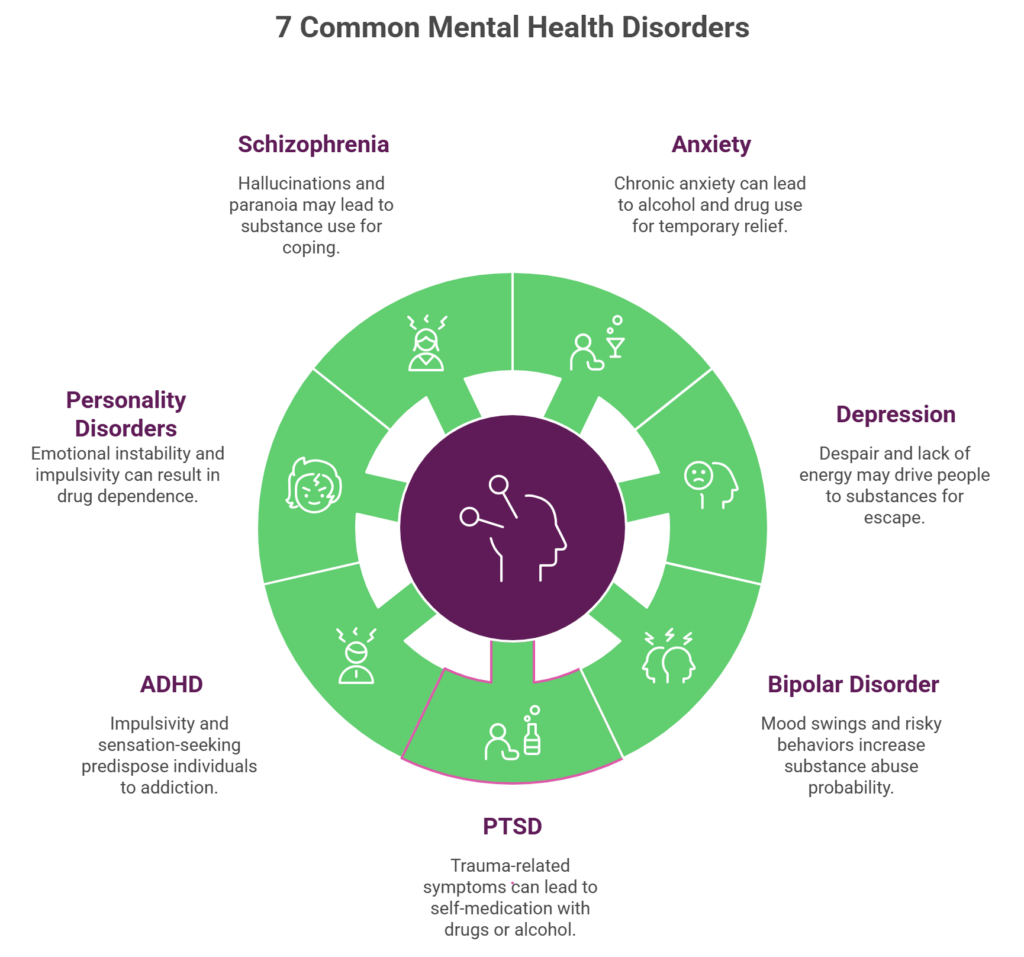
The 7 Common Mental Health Disorders Are
1. Anxiety
It is natural that chronic anxiety, panic attacks and social anxiety will cause people to relieve themselves of this condition through the use of alcohol, sedatives or prescription drugs. Although drugs can suppress the symptoms in the short-term, they raise the dependency and tend to aggravate anxiety in the long-term.
2. Depression
Depression is one of the most prevalent mental health disorder and addiction risks. Emptiness, despair, lack of energy might drive people to alcohol, opioids or even stimulants to escape their emotions.
3. Bipolar Disorder
Bipolar disorder is an extreme mood swings condition that carries with it manic episodes and depressed episodes. Compulsive actions and risky behaviors in manic phases make the abuse of substances more probable. Depression may also solidify self-medication.
4. Post-Traumatic Stress Disorder (PTSD)
Substance use disorders are closely related to PTSD. People can take medications or alcohol to desensitize flashback, nightmares, and hypervigilance. Addiction is a high risk without trauma-informed treatment.
5. Attention Deficit Hyperactivity Disease (ADHD)
ADHD is associated with impulsivity, loss of self control, and sensation seeking. These characteristics predispose a person to early mental health disorders addiction risk in the long-run in case they are not treated.
6. Personality Disorders
Other conditions include borderline personality disorder which entail emotional instability, impulsivity and interpersonal problems. Drugs can be taken to manage with uncontrollable emotions, and one becomes dependent.
7. Schizophrenia and Psychotic Disorders
Schizophrenic patients can use drugs to deal with hallucinations, paranoia or emotional discomfort. In the absence of integrated care, psychotic symptoms may become more severe and diagnosis and treatment may be complicated due to substance use.
Indications That mental health disorders addiction risk Raising
The warning signs usually include:
- Greater dependence on substances in the case of emotional distress.
- Problems with the control of emotions when not under the influence of alcohol or drugs.
- Impulsive or risk taking behavior.
- Giving up on relationships or duties.
- Heightened physical dependence symptoms
It is possible to avoid the long-term complications by identifying these patterns at an early stage.
The Significance of Addiction Therapy to Mental Health Disorders
Recovery is necessary not only with mental health but also with substance use. At Alpha Healing Center our Mental health disorders addiction risk treatment aims to provide an integrated care that helps not only to stabilize emotional health but also assist sobriety. Key components include:
- Thorough psychiatric and substance intake appraisals.
- Evidence-based interventions, including CBT, DBT, and trauma-informed care.
- Clinically-appropriate medication management.
- Prevention of relapses and emotional control.
This strategy greatly enhances the effectiveness of long-term results as opposed to treating each of the conditions individually.
Should Inpatient Dual Diagnosis Treatment Be Necessary?
Treatment in the form of dual diagnosis is usually suggested in cases where the symptoms are serious, unstable, and dangerous to the patient. This service is a 24/7 support of medical and psychological care in an organized setting. Inpatient program is particularly effective with persons who has:
- Extreme mental illness symptoms.
- Repeated relapses.
- High-risk behaviors.
- Limited external support.
At Alpha Healing Center, inpatient care is available to provide the patient with a good platform of recovery as it entails stabilization and proper diagnosis.
The ways Alpha Healing Center helps in recovery of Dual diagnosis
In Alpha healing center, we base our practice on clinical competence, ethical care and individualized treatment to reduce mental health disorders addiction risk. We have a multidisciplinary team that collaborates in order to treat both substance use disorders and mental illnesses. We offer:
- Treatment plans which are individualized.
- Psychiatric assessment and medication therapy.
- Evidence-based and holistic treatment.
- Formal group therapy and support.
- Aftercare planning and Long-term recovery.
We are not only going to achieve substance free recovery, but also emotional stability, resilience and long-term wellness.
Prevention and Risk Reduction in the Long Run
To manage mental health disorders addiction risk a person needs continuous care and lifestyle assistance. In the long run, the strategies incorporate:
- Follow-up therapy and psychiatric treatment.
- Proper stress managing strategies.
- Well-established social support.
- Regularity and order that facilitates emotional equilibrium.
Timely intervention and regular care are able to decrease the chances of relapse and lower quality of life.
Solving Mental Health Disorders Addiction Risk
Knowledge of the relationship between mental illness and addiction propensity is critical when it comes to prevention and recovery. In the event mental health disorders are never addressed, use of drugs usually becomes a need to handle stress which results in dependency.
In Alpha Healing Center, we consider that the starting point to recover is compassionate and integrated care. Mental health disorders could be treated through specialized addiction treatment and inpatient dual diagnosis treatment, which allows one to take control, restore a sense of balance and construct a substance free future.
Frequently Asked Questions(FAQs):
1. Which mental illnesses are the most addictive?
The most associated risk with mental health disorder is the anxiety disorders, depression, bipolar disorder, PTSD, ADHD, personality disorders, and schizophrenia as a result of emotional distress, impulsiveness, and self-medication tendencies.
2. Why do psychiatric illnesses put one at risk of addiction?
Mental health conditions predispose to addiction as people can use drugs to manage emotional discomfort, stress, or to overcome intrusive symptoms, which results in dependency and the development of a self-perpetuating loop of decreasing mental health and substance-use.
3. Is it possible to become addicted even with mild mental illnesses?
Yes, even unidentified or mild mental illness can predispose persons to addiction when they turn to substances to handle the stress, feelings, and even normal everyday operation in the long run.