



Compulsive Behavior Patterns and Their Role in Addiction
Obsessive Compulsive Disorder (OCD) and addiction are intricate mental disorders that at times merge in ways that are mostly misconstrued giving rise to recognizable OCD addiction patterns. The former is mainly characterized by disturbing thoughts and ritualistic actions, whereas the latter is mostly referred to drug usage or dependency behavior. Nevertheless, there is an increasing number of clinical studies indicating that these disorders have several psychological as well as neurological components in common.
Unraveling the intricacies of OCD addiction patterns will be very helpful for individuals, their families, and professionals in the field of psychology in the quest for the most mileage treatment options. People with OCD sometimes without their awareness develop compulsions so severe that they can be considered manifestations of addiction, while at the same time some of them use substances or engage in addictive behaviors as a means of rescuing themselves from the torment of obsessive thoughts. Such intersections in the realms of mental health and addiction overlap put forward the need for treatment methods that not only recognize but also cater to the combined nature of these disorders.
Understanding OCD and Its Core Features
Obsessive Compulsive Disorder (OCD) is a condition of the mind that is marked by persistent and unwanted thought patterns (obsessions), as well as repetitive acts (compulsions) that form strong compulsive behavior patterns aimed to reduce the anxiety or distress arising from the obsessions. On many occasions, these compulsions are so time consuming that they disrupt a person’s daily life. In contrast to voluntary habits, compulsions driven by OCD are experienced as uncontrollable and necessary in order to prevent the occurrence of a perceived danger or discomfort.
Neurologically , OCD has been associated with dysfunction in brain circuits comprising the orbitofrontal cortex, anterior cingulate cortex, and basal ganglia. These brain regions are responsible for decision-making, impulse control and OCD, and emotional regulation. If these circuits are not working properly, people will first of all feel very anxious and secondly, have this very powerful urge to perform their repetition, compulsion.
Grasping the essence of OCD is the first step towards a deeper understanding of the way addiction patterns in OCD come about. Due to the compulsive nature of OCD, individuals are more likely to develop OCD-related addictive habits since both disorders have repetitive behaviors serving as mechanisms through which emotional distress is lessened.
How OCD Addiction Patterns Develope
The link between experiencing OCD and developing an addiction comes from how the brain’s reward and anxiety systems work. People who suffer from OCD are usually in a state of constant anxiety, which can predispose them to seek comfort or escape through drugs, alcohol, or other addictive behaviors, thus creating a vicious circle of co-occurring OCD-related addictive habits. Their compulsive behavior can gradually morph into a substance or behavioral addiction in OCD.
Also, there are many clinical case studies that show that it’s true. Almost all of them tell the same story: after getting caught in their obsessive thoughts, they managed to get some relief through the use of substances, but as a consequence, they were left with another dependency cycle. This strengthens the idea that early intervention along with integrated treatment plans targeting OCD addiction patterns simultaneously are definitely necessary.
Compulsive Behavior Patterns vs. Addiction: Where Is the Line?
The two conditions of compulsive behavior patterns and addiction show certain similarities but they remain distinct from each other. The primary driver of OCD compulsions occurs through anxiety and fear-based mechanisms closely linked to impulse control and OCD which differ from the reward-seeking and dopamine-driven behavior of addiction. The two entities show strong overlaps which create challenges for defining their separate existence. The development of compulsions into habitual patterns which enhance their power over people leads to symptoms that resemble behavioral addiction in people with OCD addiction patterns.
Over time, the brain starts to develop a connection between the compulsive behavior patterns and its capacity to provide momentary peace, which leads to an increased cycle of compulsive behavior. The person will develop a behavioral need that resembles the dependency pattern of an addict who relies on drugs to function. The process of creating effective treatment strategies needs this distinction for its successful implementation. The typical methods for treating addiction aim to eliminate dependency, but OCD treatment needs to target the core anxiety problems and thought pattern misconceptions that drive the condition.
Impulse Control and OCD: A Critical Connection
Impulsive behaviors are a major factor in impulse control and OCD, as well as addiction. People with OCD are frequently unable to resist the compulsions that they carry out, even though they understand that their behavior doesn’t make sense. How difficult it is for these individuals to control themselves internally is very similar to how those with drug problems feel.
Researchers say that when the brain’s control system over inhibition is faulty, it results in both of these disorders. The part of the brain called the prefrontal cortex is in charge of making decisions and controlling impulses. This brain area may not be working properly in people who have OCD addiction patterns, thus it is more difficult for them to quit the repetitive behaviors.
Strengthening impulse control is an important aspect that can be done with the help of cognitive, behavioral therapy (CBT), mindfulness techniques, and medication intervention as well. The combined treatment methods that concentrate on emotional regulation, distress tolerance, and habit restructuring are especially very effective.
Why Dual Diagnosis Matters
The coexistence of OCD and addiction is a case of dual diagnosis or mental health and addiction overlap. It implies that to be successful recovery requires the simultaneous treatment of both disorders. When there is treatment of only one disorder, OCD for example, and the addiction is ignored, this usually results in partial healing or relapse.
Integrated treatment programs that incorporate psychiatric care, psychotherapy, and addiction counseling have yielded the best results. Such programs get to both disorders’ core issues instead of just relieving symptoms. Therapies supported by scientific evidence such as ERP for OCD, along with addiction therapies such as motivational interviewing and relapse prevention strategy, have been demonstrated to yield great results in treatment facilities.
About Alpha Healing Center
Alpha Healing Center is a leading mental health and rehabilitation facility that offers holistic, kind, and evidence- based therapies to addicts and people with mental health problems, including those addicted to OCD patterns at Alpha Healing Center is a mission to bring well being, dignity, and balance back to patients’ lives. It provides a secure and supportive setting that makes the healing process both facilitated and encouraged
Facilities and Treatment Services
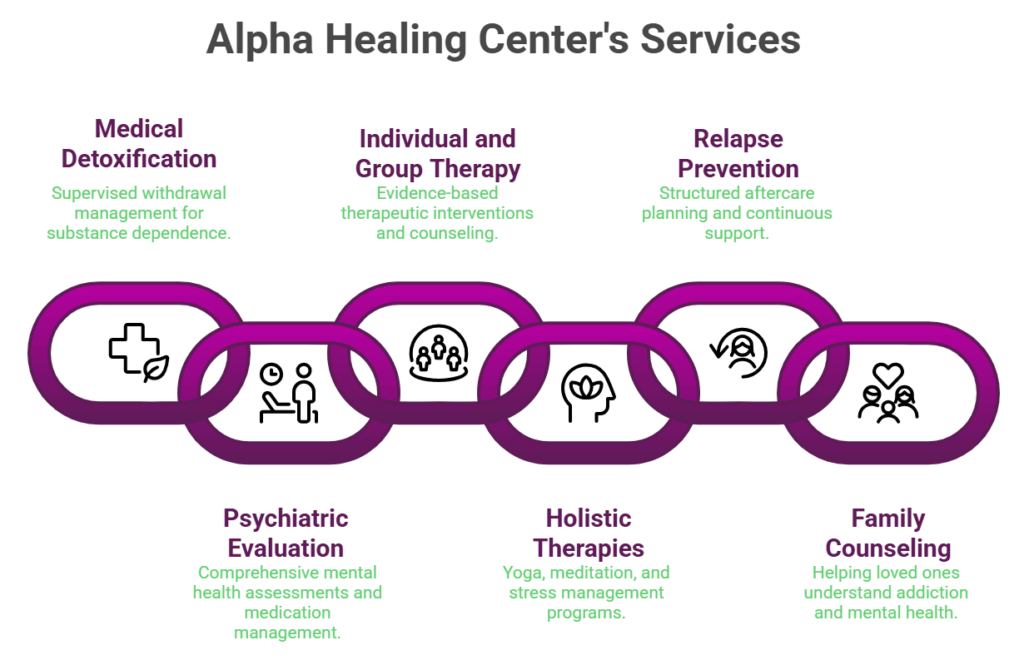
Alpha Healing Center provides state-of-the-art rehabilitation facilities designed to promote healing, comfort, and privacy. Their services include:
- Medical Detoxification: Supervised withdrawal management for individuals struggling with substance dependence.
- Psychiatric Evaluation and Treatment: Comprehensive mental health assessments and medication management for conditions such as OCD, anxiety, and depression.
- Individual and Group Therapy: Evidence-based therapeutic interventions including CBT, ERP, and counseling sessions.
- Holistic Therapies: Yoga, meditation, mindfulness training, and stress management programs to enhance emotional well-being.
- Relapse Prevention Programs: Structured aftercare planning and continuous support to prevent setbacks.
- Family Counseling: Helping loved ones understand addiction and mental health while fostering a supportive recovery environment.
How Treatment Helps Break OCD Addiction Patterns
Alpha Healing Center’s successful treatments enable clients to liberate themselves from the chains of OCD addiction patterns by considering the mental and behavioral facets of the disorder. With the help of a well organized therapy, the patients are taught to recognize the stimuli, challenge the irrational thoughts, and come up with healthier ways of handling the situation.
ERP (Exposure and Response Prevention) is a step by step process of exposing the patient to the source of their anxiety while at the same time preventing the performance of the compulsive behavior patterns, thus helping their brain be retrained and dependency on rituals to be diminished. Moreover, addiction therapy will provide clients with the necessary skills for craving management, trigger avoidance, and support system building.
Engagement of relatives, regular psychotherapy, and aftercare arrangements will be instrumental in further consolidating the recovery effects, thus guaranteeing that the clients will be not only without symptoms but also emotionally strong and confident in leading an enjoyable life.
Conclusion
The connection between OCD and addiction is complicated, very interrelated, and not very noticed. It is important to understand OCD addiction patterns in order to identify when compulsive behavior patterns lead to drug addiction. The kinesis between impulse control and OCD, as well as the broader connection between mental health and addiction, point to the need for integrated, dual, diagnosis treatment approaches.
Early intervention together with effective therapy methods and complete mind and body rehabilitation programs enables people to break free from their self-destructive patterns and regain control over their existence. The Alpha Healing Center functions as an essential facility which provides complete evidence-based therapeutic solutions that address both OCD and addiction treatment needs.
Frequently Asked Questions
What is OCD addiction?
OCD addiction refers to situations where obsessive-compulsive behaviors and addictive behaviors overlap. While OCD is driven mainly by anxiety and fear, addiction is driven by reward-seeking behavior. In some cases, compulsions can become so intense that they resemble addictive patterns.
What are OCD addiction patterns?
OCD addiction patterns follow a cycle of repeated behavior which includes both compulsive acts and substance consumption as methods for anxiety control and this cycle develops into an unbreakable pattern that requires professional assistance for its resolution.
Is OCD addiction common?
Research indicates that people with OCD face greater chances of developing substance use disorders than the general population, particularly when their OCD remains untreated.