



Mental Health Understanding the Impact of Trauma
Trauma is a highly painful experience that is experienced by millions of people across the globe. Traumatic experiences with abuse and neglect since childhood and serious accidents or loss can cause permanent marks in the emotional and mental health. It has been demonstrated that traumatic persons have a very high risk of developing addiction. This happens because trauma often disrupts the brain’s natural stress response, creating vulnerabilities that make drugs seem like an escape. The knowledge of trauma leading to addiction will be important in an early intervention, treatment and recovery.
Alpha Healing Center says the fact that addiction is not usually a separate problem. In the majority of situations, it is mixed with the traumas that are not resolved. People can turn to medication or alcohol in order to get rid of painful memories or emotional suffering. This symptom, even though it offers a temporary relief, may develop into a harmful circle that aggravates mental and physical health. With the identification of the trauma symptoms and their treatment along with substance use, the recovery will have better outcomes.
The Science Behind Trauma Leading to Addiction
The human brain is a reactionary organ that triggers the stress response system in response to the trauma releasing hormones like cortisol and adrenaline. Though this reaction is necessary to survive under acute circumstances, long-term exposure to stress may change the way the brain works. These alterations can affect emotional regulation, memory processing and decision-making. Consequently, people can turn to substances in order to calm down themselves or desensitize the emotional trauma.
The study by Alpha Healing Center reveals that individuals with unresolved trauma or post-traumatic stress disorder (PTSD) tend to develop trauma recovery and substance use habits. This entails taking alcohol, or illegal drugs as a way of handling the situation. The short-term relief of these substances makes them more likely to continue using them thus developing a dependency that makes it difficult to quit. This cycle illustrates the need to have early intervention based on trauma with a view of avoiding long-term addiction.
It has also been found by psychological studies that trauma may have implications on neurotransmitter systems, especially to dopamine and serotonin pathways. These are neurotransmitters that control mood, pleasure. The fact that trauma can impair these systems also means that people can be more prone to addiction because they will experience more anxiety and depression. This intersection approach to both trauma and substance use will make the Alpha Healing Center provide its clients with comprehensive care that will treat the underlying causes of their problems.
Signs That Trauma May Be Leading to Addiction
When trauma influences addictive behaviors, recognizing it is an important step in recovery. Common signs include substance use, emotional numbness, trouble managing stress, and relapses. Substance use is frequently preceded by emotional triggers e.g. flashbacks, nightmares, unwanted memories. Knowing these patterns will assist the caregivers and the professionals get in before the addiction becomes severe.
Individuals experiencing addiction caused by past trauma may also exhibit behavioral changes, such as social withdrawal, irritability, or heightened sensitivity to stress. These symptoms emphasize the complexity of the connection between trauma and substance use. Alpha Healing Center underlines that dual diagnosis model, or treating both a trauma and an addiction at the same time, is vital to the process of breaking the cycle and facilitating lasting recovery.
Family and loved ones can be very critical in notice of these warning signs. A change in behavior, mood, or routines can be useful in determining whether one is experiencing trauma-related addiction. Due to the creation of a positive atmosphere, the families can motivate individuals to seek professional assistance and undergo organized programs of treatment.
How Trauma Influences Substance Use
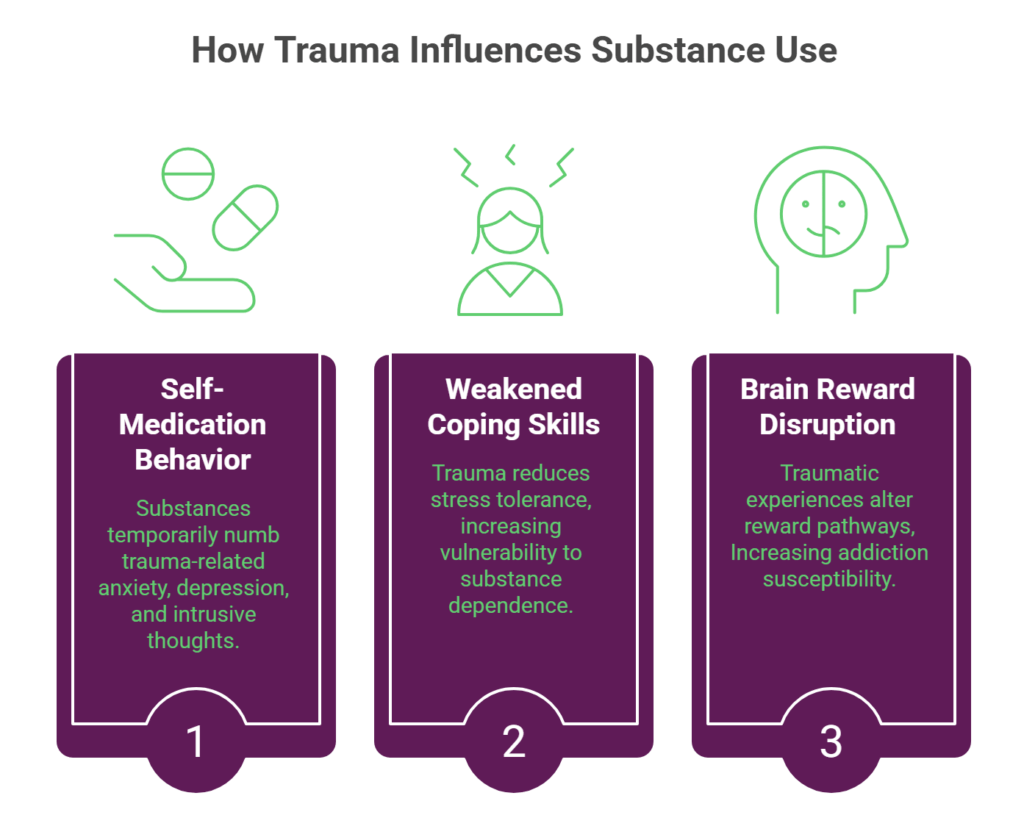
Addiction may be caused by trauma in various forms. First, the substances can be a kind of self-medication that relieves anxiety, depression or unwanted thoughts in the short term. Second, traumatic events would damage coping skills and leave the victims unprepared to handle stress. Finally, traumatic experiences may change the reward pathways of the brain, making one susceptible to addiction.
These connections are acknowledged by the holistic approach to trauma and addiction by Alpha Healing Center. Clients get to learn to have healthier coping strategies through therapy, counseling and evidence based interventions. Indicatively, cognitive-behavioral therapy (CBT) is used to ensure that people identify and re-interpret unhealthy thought patterns which are the cause of trauma as well as addiction. Mindfulness and emotional control practices also provide the client with the tools to deal with stress without drugs. Knowing the effects of trauma leading to addiction assists the clients in viewing the connection between their stimuli and addictive overactions.
Addressing Environmental and Social Factors
The center also emphasizes the importance of looking at environmental and social factors that can contribute to trauma-related addiction. Positive relations, good living conditions, and the availability of community resources are important in recovery. Alpha Healing Center provides people with the opportunity to address trauma by offering a safe and nurturing environment and reducing the possibility of a relapse.
Therapeutic Approaches to Treat Trauma Leading to Addiction
Treatment of trauma-related addiction is a complicated condition that needs a full-combined approach. Trauma-informed care is integrated with substance use interventions in the middle of therapy at Alpha Healing Center. The approach will make sure that the emotional and psychological needs of the clients are met in addition to the addiction treatment. The knowledge of trauma leading to addiction helps therapists to create specific interventions.
Evidence-Based Therapy Choices
Trauma-focused cognitive-behavioral therapy (TF-CBT) is one of the effective methods that will help the client process traumatic events and learn to cope with them. Another piece of evidence-based practice which is employed to decrease the level of emotion associated with traumatic memories is the Eye Movement Desensitizing and Reprocessing (EMDR). Both treatments seek to separate the association between the traumatic background and compulsive drug consumption, which helps to achieve long-term healing.
Trauma and addiction treatment is also based upon group therapy. Through the sharing of experiences with other people who are also going through the same situation, people find a sense of community and recognition. The psychoeducation sessions also empower the clients since they learn how the brain responds to the trauma, the addiction cycle and the way to avoid relapse. With such interventions, the Alpha Healing Center is able to take care of trauma recovery and substance use in a holistic manner.
Building Healthy Coping Mechanisms
To ensure prevention of relapse and sustaining long-term well-being, the development of effective coping mechanisms is required. Clients at Alpha Healing Center get to learn how to handle stress, control their emotions, and address triggers without turning to substances. Mindfulness meditation, journaling, and stress reduction exercises are all practices that are useful in the process of recovery.
Over time, clients can understand trauma leading to addictive behaviors and learn how to respond. Healthy coping mechanisms are further strengthened through family involvement and the social support networks. Alpha Healing Center invites families to undergo therapy sessions and educational programs, which get to learn how trauma and addiction interrelate. This treatment method increases chances of successful recovery and minimizes the chances of relapse.
Dual Diagnosis and Integrated Care
Several patients with addiction caused by past trauma, need dual diagnosis therapy. Alpha Healing Center deals with integrated care where the conditions are treated at the same time. This will make sure that the clients do not have disjointed care that can impair the recovery.
Combined therapies comprise individualized therapy, medication regimen where needed, and continuous evaluation of the progress. The integration of the trauma-intervention and substance use treatment methods offers a holistic approach to the clients, which considers both the causes and symptoms of the condition. It has been demonstrated that this approach can increase the long-term recovery rates and the general quality of life. The knowledge of trauma leading to addiction makes the clients remain motivated in the course of therapy.
The Role of Family and Community Support
The support systems are important in assisting in recovery of trauma-related addiction. Emotional reinforcement, accountability, and encouragement are given by families, friends, and communities. Alpha Healing Center has made it clear that the loved ones should be involved in the healing process. Training families on trauma recovery and substance use makes families aware of the issues that their clients go through, and helps create a positive atmosphere.
Support groups with peers can be extremely helpful. By telling others about the experiences, the difficulties, and the successes of others who have gone through similar situations, one will have a feeling of belonging and isolation will be minimized. These social networks strengthen the skills and coping mechanisms acquired in the therapeutic procedure, which forms a long-term basis of healing.
Long-Term Recovery and Preventing Relapse
Relapse prevention is an important aspect of recovery in addiction related to the trauma. Alpha Healing Center designs personalized after care plans that involve continuing therapy, support groups, and check-in sessions with clients being taught to identify early signs of relapse and put their coping measures in place before problems get out of hand.
Constant help of specialists, relatives, and friends will also help the clients remain sober and emotionally stable, which will help to minimize the chances of reverting to their addiction trends.
Selecting Alpha Healing Center in the case of Trauma and Addiction Care
Alpha Healing Center has already gained a positive reputation in terms of providing trauma and addiction care. The center has a team of very professional trained personnel, and it has personalized evidence-based interventions, which are used to treat both trauma and substance use. The clients enjoy a safe and warm environment where they can develop coping mechanisms, process the trauma and obtain professional guidance during the recovery process.
The comprehensive nature of the center consists of therapy, counseling, group activities, and educational programs. Alpha Healing Center has the greatest likelihood of successful recovery through the simultaneous treatment of trauma and addiction. The combination of medical, psychological, and social support guarantees that clients are provided with holistic care depending on the needs of the particular clients. In the long-run, such an approach will enhance resilience, emotional stability, and long-term well-being.