

Stress is a normal aspect of life, though chronic or persistence of stress may have an extreme impact on mental and physical health. The relationship between stress substance dependence is particularly concerning with people becoming more and more dependent on alcohol, drugs, or other substances as a way of coping. Our mission at the Alpha Healing Center is to learn to grasp and disrupt this cycle with holistic evidence-based interventions.
Will discuss the role of long-term stress in substance dependence, biologic and psychologic processes of dependency, and prevention and treatment.
Familiarizing Stress and its Effects
When an individual experiences stress, it leads to the natural fight or flight reaction of the organism, which discharges cortisol and adrenaline. Stress in the short term may boost performance and concentration, but the long-term result is adverse consequences on the brain and body such as stress related substance use. Stress over a long period may lead to:
- Increased anxiety and affective instability
- Poor sleep and fatigue
- Reduced cognitive and decision-making skills
- Higher vulnerability to substance use as an intervention
These aspects together may form a vicious cycle of stress causing substance use which subsequently causes stress, developing a cycle of nervousness and drug addiction.
The way Stress Leads to Substance Dependence
People who experience stress on a regular basis can resort to drugs as a means of temporary relief. Alcohol, nicotine, prescription medications, or dangerous substances are able to temporarily lower anxiety, deaden emotional pain or raise the mood. The sad part is that this relief is not long-term and tends to increase the issue in the long term.
Chronic stress, biologically, interacts with all of the reward pathways of the brain, especially the mesolimbic dopamine system. This change leads to cravings and strengthens substance-seeking behavior, thus forming a close connection between stress and dependence.
Stress may also affect self regulation methods psychologically, therefore, individuals have a tendency to resort to substances as a quick fix instead of using healthy coping mechanisms to manage stress.
Risk Factors That Contribute to Substance Dependence due to Stress
A number of factors may increase the risk of stress substance dependence:
- Genetic predisposition: A history of addiction in the family makes one vulnerable.
- Stressors in the environment: Work, financial pressures or experiences of trauma.
- Mental illnesses: Anxiety, depression, or bipolar disorder may increase the effects of stress.
- Weak managing skills: Inability to control emotions or deal with stress.
The prevention of these risk factors is best achieved by identifying them early.
Indications of Stress Related Substance Use
Early signs of stressful use of substances have to be traced to prevent the development of stress substance dependence. Common signs include:
- Relaxation or unwinding with the use of substances
- Tolerance and requirements of increased doses
- Failure to perform duties or relationships as a result of substance use
- Increased irritability or anxiety, devoid of substances
- Stressful situations are triggers to cravings
Treatment outcomes can be enhanced through early intervention.
The Vicious Cycle of Substance Dependence and Anxiety
Stress is also closely related to anxiety as it usually comes along with making it a complex relationship with substance use. Persons can have an increase in worry, panic attacks or persistent tension, which causes them to use substances as a temporary solution. Such a trend strengthens stress substance dependence, since the more one uses the substance, the more anxious they become and hence become more dependent on the drug or alcohol. The only solution is combined care that must focus on both stress and addiction.
Prevention Strategies
Stress substance dependence prevention is achieved by dealing with stress before it develops into addiction. Strategies that will work include:
Techniques of Stress Management
- Deep breathing and Meditation
- Frequent physical exercise and activity
- Routine schedules and time management
- Writing and emotional disclosures
Developing Healthy coping methods
- Problem-solving approaches
- Seeking social support of friends or relatives
- Cognitive-behavioral measures of dealing with negative thinking
Professional Support
The possibility of the stress related use of substances can be reduced with the help of early therapy or counseling that would equip them with tools to cope with the stress in an adaptive way.
Lifestyle Modifications
- Sleep and nutrition is sufficient
- Restricting stimulants and caffeine
- Spending time in hobbies or rest
Such interventions strengthen the resilience and decrease the dependence on substances.
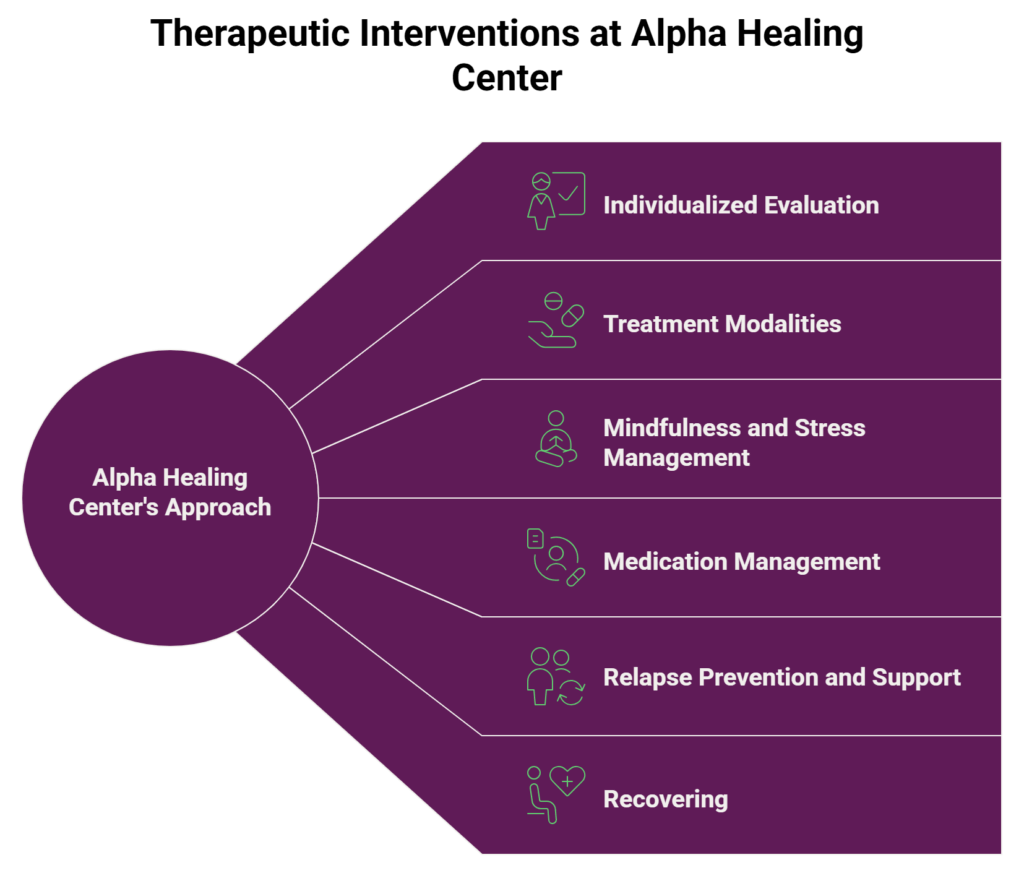
Therapeutic Interventions at Alpha Healing Center
Alpha Healing Center is a facility where we deal with an integrated treatment of people who are affected by stress substance dependency. Our approach includes:
- Individualized evaluation to determine the stresses and substances use patterns
- Treatment like Cognitive Behavior Therapy (CBT) and Dialectical Behavior Therapy (DBT)
- Mindfulness based and stress management workshops
- Treatment with medications where necessary
- Relapse prevention and continuous support (in the long term)
We aim at restoring emotional balance, enhancing coping skills, and recovering on a sustainable basis.
Why Integrated Care Matters
Therapy of stress and treatment of substance dependence should be done individually which can result in relapse. Integrated care controls both of them and makes sure that quality stress management helps to deal with addiction and vice versa. This integrative method increases the effectiveness of treatment, minimizes the risk of relapse and increases the quality of life.
Signs You Need Professional Help
Professional assistance is required in the case of:
- Frequent use of substances to deal with stress or anxiety
- Escalating use or tolerance
- Emotional or functional dysfunction secondary to stress or drug use
- Problems with adopting healthy coping strategies
Early intervention will enhance results and minimize the problems of stress substance dependence in the long run.
Conclusion
Stress over a long time is an important variable of substance dependence development. Recognizing the pathophysiology of stress substance dependence and applying preventative and treatment strategies are the main steps to the process of the break cycle. Short-term care like the one offered by Alpha Healing Center is the best avenue towards recovery, emotional stability, and long-term wellbeing.
FAQs
What is the relationship between long-term stress and substance dependence?
Repeated stress changes the brain chemistry and reward systems making substances an attractive way of coping. In the long run, it may turn into an addiction to the substance without appropriate measures.
What is the substance use associated with stress?
Stressful substance use is a phenomenon where the affected people take drugs or alcohol as a way of handling stress in the long term. Such temporary alleviation is able to develop into dependence, which strengthens anxiety and emotional lack of control in the long term.
What is the relationship between anxiety and substance dependence?
The stress and emotional pain are aggravated by anxiety, and people resort to substances to alleviate their state. Substance dependence causes anxiety which in turn increases anxiety in recurrent use which forms a reinforcing loop between substance dependence and anxiety.