
Should You Consider Rehabilitation Outside Lucknow? What Families Need to Know
When someone in the family is struggling with addiction or mental health difficulties, finding the right treatment can feel overwhelming. Families often begin by searching for a rehabilitation centre in Lucknow because staying close to home may seem more convenient. However, depending on the person’s needs and circumstances, it may also be worth considering treatment options outside the city.
Choosing a rehabilitation centre is not simply about finding a facility nearby. It involves understanding the type of care required, the experience of the treatment team, the available therapies, the level of supervision, and the support provided after treatment.
For some individuals, outpatient care within Lucknow may be appropriate. Others may benefit from a structured residential programme in another location. The right choice depends on a professional assessment, personal preferences, family circumstances, and clinical needs.
This guide explains when rehabilitation outside Lucknow may be worth considering and what families should evaluate before making a decision.
Why Do Some Families Consider Rehabilitation Outside Lucknow?
Choosing treatment outside one’s home city is a personal decision. There is no universal rule that rehabilitation outside Lucknow is better than receiving treatment locally. Both options can be suitable, depending on the situation.
However, some families explore residential rehabilitation in India beyond their immediate area for several reasons.
1. A Structured Environment Away from Familiar Triggers
Everyday environments can sometimes make recovery more challenging. Familiar social circles, stressful routines, easy access to alcohol or other substances, and situations associated with addictive behaviour may contribute to repeated setbacks.
A residential programme outside the city can provide distance from some of these triggers while allowing the individual to focus on treatment.
However, changing locations alone does not resolve addiction. Psychological treatment, appropriate clinical care, coping skills, and a continuing recovery plan remain important.
2. Time to Focus on Treatment
Balancing recovery with work, family responsibilities, and everyday pressures can be difficult for some individuals.
A residential setting provides a more structured routine in which treatment sessions, personal reflection, wellness activities, and recovery planning can become part of daily life.
This approach may be useful for people who need more support than occasional appointments can provide. A qualified professional should assess whether residential care is appropriate.
3. Access to a Suitable Treatment Programme
Not every facility offers the same services. Some focus primarily on substance use, while others may provide support for co-occurring mental health conditions.
Families considering options outside Lucknow can compare programmes based on the person’s needs rather than location alone. Important factors include the availability of qualified psychiatrists and psychologists, individual therapy, family counselling, medical support, and continuing care.
The objective should be to find a programme that fits the individual, not simply the one that is farthest from home.
Should You Choose Outpatient Treatment or Residential Rehabilitation?
Before travelling to another city or state, it is important to understand whether residential treatment is actually necessary.
Outpatient Treatment
Outpatient treatment allows an individual to attend consultations or therapy sessions while continuing to live at home. Depending on the treatment plan, it may include psychiatric consultations, individual counselling, medication management, and follow-up appointments.
Outpatient care may be appropriate for people whose needs can be managed safely without continuous residential supervision and who can participate consistently in treatment.
It can also make family involvement and ongoing appointments easier to coordinate.
Residential Rehabilitation
Residential rehabilitation involves staying at a treatment facility for a structured period. Depending on the programme, treatment may include clinical assessment, psychological therapies, supervised routines, group sessions, family involvement, and relapse prevention planning.
Residential care may be considered when addiction is significantly affecting daily functioning, outpatient treatment has not provided sufficient support, or the person’s circumstances make recovery particularly difficult at home.
For individuals with serious mental health symptoms, withdrawal risks, or other urgent medical concerns, the appropriate level of care must be determined by qualified professionals. A residential rehabilitation centre is not automatically a substitute for hospital-based treatment when emergency or intensive medical care is needed.
What Should Families Look for When Choosing a Rehabilitation Centre?
Whether you choose a rehabilitation centre in Lucknow or consider a facility in another state, the quality and suitability of treatment should guide your decision.
Qualified Clinical Professionals
Ask about the qualifications and roles of the psychiatrists, clinical psychologists, counsellors, and other professionals involved in treatment. Understand who conducts assessments, who develops the treatment plan, and how clinical concerns are addressed.
Individualised Treatment Plans
Addiction and mental health conditions affect people differently. A suitable programme should consider the person’s history, current symptoms, physical health, emotional needs, and recovery goals.
For individuals experiencing both addiction and mental health difficulties, it is particularly important to understand how the programme addresses these concerns together.
Appropriate Medical Support
If someone has developed physical dependence on alcohol or certain other substances, withdrawal can sometimes be medically dangerous. Ask how the facility assesses withdrawal risk, provides medical supervision, and responds to emergencies.
Families should not assume that every rehabilitation centre provides the same level of medical care.
Family Communication and Involvement
Treatment can affect the entire family. Ask whether family counselling, progress updates, and guidance for supporting recovery are available, subject to consent and confidentiality requirements.
Understanding how communication will work is particularly important when the facility is located far from home.
Continuing Care After Discharge
Recovery does not end when a person leaves a residential programme. Follow-up consultations, continued therapy, relapse prevention strategies, and support with returning to everyday responsibilities can all matter.
Before admission, ask what happens after discharge and how follow-up care can be coordinated with the individual’s home environment in Lucknow.
Considering Alpha Healing Center in Gujarat
For families in Lucknow who are open to travelling for residential treatment, Alpha Healing Center is an option to explore.
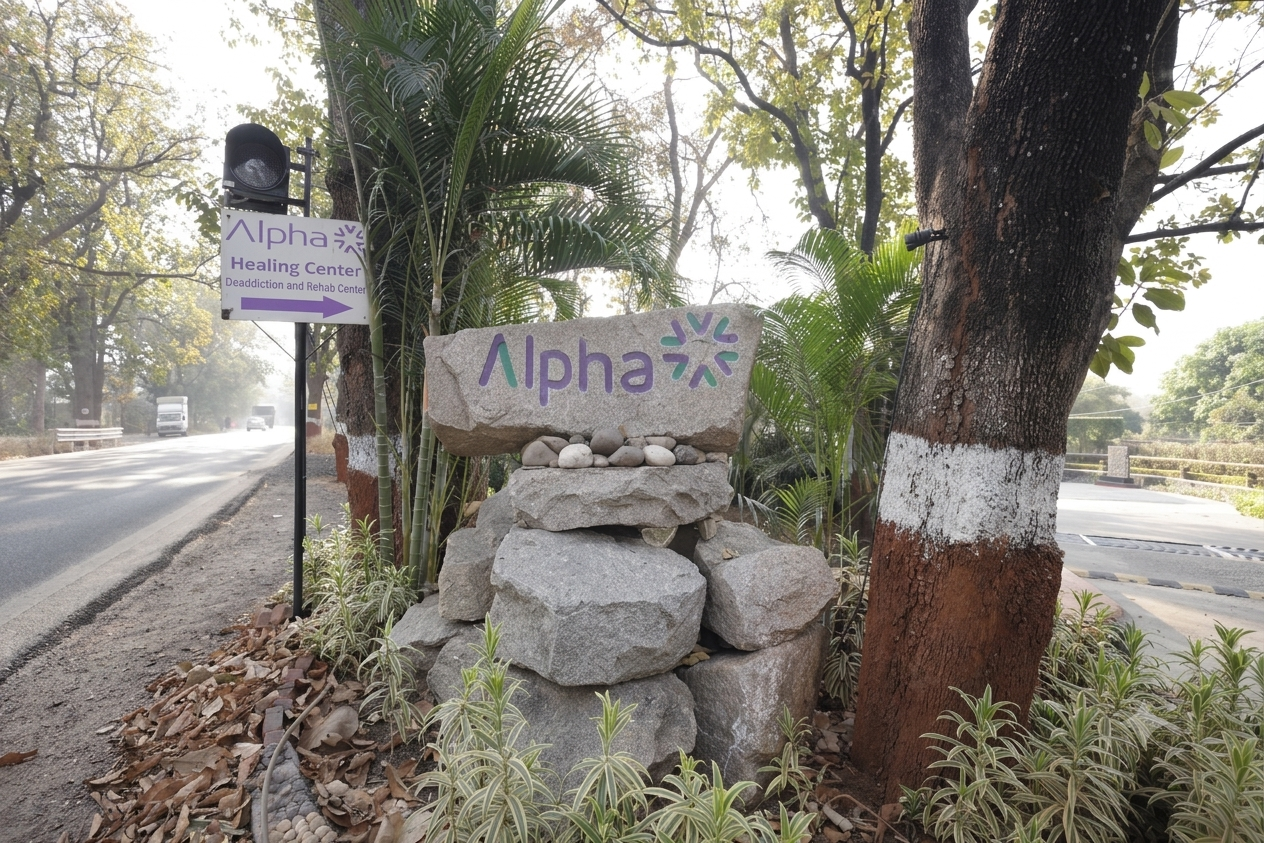
Alpha Healing Center is located in Village Narukot, Pavagadh–Jambughoda Road, near Don Bosco School, Jambughoda, Panchmahal, Gujarat. It is not physically located in Lucknow.
The centre provides addiction treatment and mental health support, with treatment approaches selected according to individual needs. Its services include psychological therapies and support for people experiencing addiction alongside certain mental health conditions.
For families comparing residential rehabilitation in India, it is worth discussing the individual’s circumstances with the treatment team before deciding whether the programme is appropriate.
You can learn more about Alpha Healing Center and its approach to recovery to understand the centre’s background and services.
What Should You Consider Before Travelling for Treatment?
Travelling outside Lucknow for treatment requires practical planning. Before making a decision, families should consider the following points.
Travel and accessibility: Understand the journey to the facility and how family members can visit or participate in treatment when appropriate.
Admission requirements: Ask about the assessment process, eligibility, treatment options, expected duration, and what information is required before admission.
Costs and programme details: Request a clear explanation of the programme fees, what is included, and any additional expenses. Clarify payment and refund policies before making a commitment.
Consent and willingness: Discuss treatment openly with the person concerned whenever possible. Alpha Healing Center’s admission process is voluntary, so families should understand the consent requirements before proceeding.
Aftercare arrangements: Plan how the person will access continued support after returning to Lucknow. This may involve follow-up consultations, local mental health professionals, family support, or other services recommended by the treating team.
These considerations can help families make a more informed decision and avoid choosing a facility based only on promotional claims or amenities.
How to Begin the Admission Process
If you are considering treatment at Alpha Healing Center, the first step is to discuss the individual’s needs with the admissions team. This conversation can help clarify the available programme options, assessment requirements, and whether residential treatment may be suitable.
You can review the admission process before making an enquiry. It is helpful to prepare information about the person’s treatment history, current concerns, existing medical care, and any questions about travel or family involvement.
You can also contact Alpha Healing Center to discuss treatment options and the next steps.
If the person is experiencing an acute psychiatric crisis, severe withdrawal symptoms, or an immediate risk of harm, seek urgent local medical assistance rather than delaying care to arrange travel.
Making the Right Choice for Your Family
Deciding whether to seek rehabilitation in Lucknow or outside the city requires careful consideration. Local outpatient treatment may be practical for some people, while others may benefit from a structured residential programme that better matches their clinical needs.
The most important factors are the suitability of the treatment plan, the qualifications of the professionals involved, appropriate medical support, family communication, and a clear plan for continuing care.
For families willing to consider treatment beyond Uttar Pradesh, Alpha Healing Center in Gujarat provides another option to discuss with its treatment team. Taking the time to ask questions, understand admission requirements, and assess individual needs can help make the decision more informed.
The goal is not simply to find a rehabilitation centre in another city. It is to find the right level of professional support for the person’s recovery and long-term well-being.