
Schizophrenia: Early Warning Signs and Types
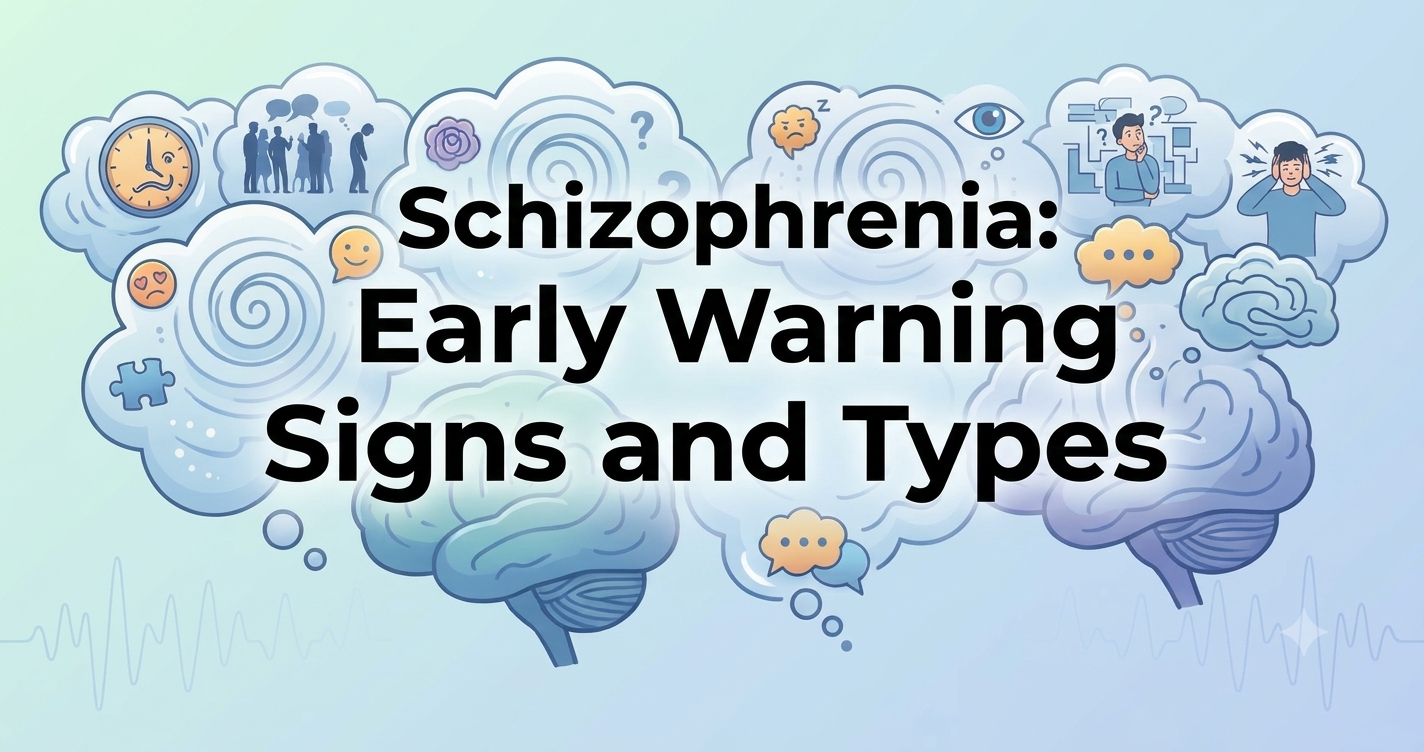
Schizophrenia, known as सिज़ोफ्रेनिया in Hindi, is a complex mental health condition that affects how a person thinks, perceives reality, processes information, and functions in daily life. Recognizing early warning signs and seeking timely treatment can help reduce its impact on relationships, education, work, and everyday activities. With appropriate treatment and ongoing support, many people with schizophrenia can manage their symptoms and work towards recovery.
What Is Schizophrenia?
Schizophrenia is a psychiatric disorder characterized by disturbances in perception, thinking, motivation, cognition, and daily functioning. Common symptoms include hallucinations, delusions, and disorganized thinking or behaviour.
Symptoms generally fall into three categories:
- Positive symptoms: Experiences such as hallucinations, delusions, and disorganized thinking that are added to a person’s usual functioning.
- Negative symptoms: Reduced emotional expression, motivation, speech, and social engagement.
- Cognitive symptoms: Difficulties with attention, memory, planning, and decision-making.
What Are the Early Warning Signs of Schizophrenia?
Early warning signs may develop gradually and can include social withdrawal, difficulty concentrating, changes in sleep, unusual beliefs, increased suspiciousness, reduced motivation, and declining performance at work or school. Some people may also experience unusual perceptual changes.
These signs do not automatically mean someone has schizophrenia, as other mental health conditions and medical factors can cause similar changes. A professional assessment is important when symptoms persist, worsen, or interfere with daily life.
Schizophrenia should not be confused with dissociative identity disorder, formerly called multiple personality disorder. Despite the common interpretation of its name as meaning a “split mind,” schizophrenia does not mean having multiple personalities. It involves disturbances in thinking, perception, and the experience of reality.
Types of Schizophrenia
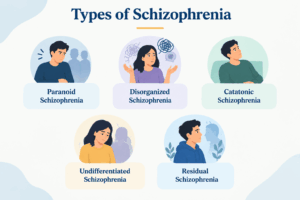
Traditionally, schizophrenia was classified into five subtypes based on the symptoms that were most prominent:
- Paranoid schizophrenia: Mainly associated with delusions and suspiciousness.
- Disorganized schizophrenia: Associated with disorganized thinking, speech, and behaviour.
- Catatonic schizophrenia: Characterized by marked changes in movement or responsiveness.
- Undifferentiated schizophrenia: Used when symptoms did not fit one specific subtype.
- Residual schizophrenia: Used when prominent symptoms had reduced but some signs of the disorder remained.
These classifications are no longer recognized as separate diagnostic subtypes in the DSM-5-TR. Modern assessment focuses on the person’s current symptoms, their severity, the course of the condition, and its impact on daily functioning. Catatonia remains clinically relevant and can occur in several psychiatric and medical conditions.
Causes and Risk Factors
Schizophrenia develops through a complex interaction of genetic vulnerability, neurodevelopmental processes, and environmental influences. No single factor explains every case.
Key risk factors and associations include:
- Genetic vulnerability: Having a close relative with schizophrenia can increase risk, although family history does not make the condition inevitable.
- Neurodevelopmental factors: Differences in brain development and neural functioning may contribute to vulnerability.
- Prenatal and perinatal factors: Certain complications during pregnancy or around birth have been associated with an increased risk.
- Environmental and social influences: Childhood adversity, significant stress, and other environmental factors may contribute to risk in susceptible individuals.
- Cannabis and other psychoactive substances: Frequent cannabis use, particularly high-potency products, is associated with an increased risk of psychosis, especially among vulnerable individuals.
These factors influence risk rather than determine that someone will develop schizophrenia. The condition is not caused simply by poor parenting, personal weakness, or a lack of willpower.
Treatment and Supporting Someone With Schizophrenia
Schizophrenia requires an individualized treatment approach that may combine medication, psychological interventions, rehabilitation, and ongoing support. Antipsychotic medication is central to managing psychotic symptoms and reducing the risk of relapse.
Effective care may include:
- Antipsychotic medication: Helps manage symptoms such as hallucinations and delusions. A psychiatrist determines the appropriate medication and monitors its benefits and side effects.
- Family psychoeducation: Helps family members understand schizophrenia, recognize warning signs, and provide informed support.
- Psychological interventions: Cognitive behavioural therapy for psychosis (CBTp), where appropriate, can help people manage distress and develop coping strategies.
- Psychosocial rehabilitation: Supports daily living skills, social relationships, education, employment, and independence.
- Substance-use interventions: Addressing cannabis, alcohol, or other substance use can be an important part of treatment.
- Early intervention and relapse prevention: Timely care, regular follow-up, and recognizing early changes can support long-term stability.
Family members can help by communicating calmly, encouraging treatment, supporting daily routines, and seeking professional guidance when symptoms worsen. It is important to listen without judgment and avoid stigmatizing or blaming the person.
Treatment is not limited to reducing hallucinations or delusions. It also aims to improve quality of life, support functional recovery, and help individuals participate more fully in daily life.
Need Guidance for Schizophrenia?
If you or a family member is experiencing symptoms of schizophrenia, seeking professional guidance can be an important first step. Contact Alpha Healing Centre on our toll-free number for confidential guidance and information about available treatment options.
Call our toll-free number: 1800-547-2060
With appropriate professional care and support, people experiencing schizophrenia can work towards improved well-being and recovery.