If you have landed on this page searching for “Charas (white powder) drug,” you may be confused, worried, or desperate for clear answers. At Alpha Healing Center, we hear this question more often than you might imagine—and the confusion itself is a sign of how dangerous the street drug market can be. In the next few minutes, we will explain exactly what charas traditionally is, why the term sometimes gets attached to a white powder, where this problem is most severe in India, what the risks are, and—most importantly—how anyone struggling with a charas-related substance can find genuine, lasting recovery.
What Is Charas? The Traditional Cannabis Resin
Charas is a potent, hand-made cannabis concentrate — the resin collected from the flowering tops of the female cannabis plant (Cannabis sativa or Cannabis indica). It has been used for centuries across the Indian subcontinent, particularly in the Himalayan regions, and remains one of the most widely recognised forms of cannabis in India.
Key Characteristics of Pure Charas
| Feature | Description |
|---|---|
|
Appearance |
Dark brown, black, or greenish-brown; soft, sticky, and pliable when fresh; hardens with age. It never looks like a white powder in its traditional form. |
|
Texture |
Waxy, resinous, often rolled into balls or sticks. |
|
Main psychoactive compound |
Tetrahydrocannabinol (THC), the primary cannabinoid responsible for the “high.” |
|
Other active compounds |
Cannabidiol (CBD), cannabinol (CBN), terpenes, and more than 100 other cannabinoids. |
|
How it’s made |
Fresh cannabis flowers are gently rubbed between the hands; the resin that sticks to the palms is slowly scraped off and rolled into the final product. No solvents or chemicals are used in traditional production. |
|
Potency |
Significantly higher THC concentration than marijuana (ganja) — typically 20% to 60% THC, compared to 10–25% in high-grade marijuana flowers. |
Street Names for Charas (and Related Cannabis Products)
- Hash, hashish (internationally)
- Charas, cream, malana cream (India, Nepal)
- Bhang, ganja (other cannabis preparations; not identical but often grouped together)
- Black, nasha, stuff (casual street terms)
Why Do People Ask About “Charas (White Powder)”?
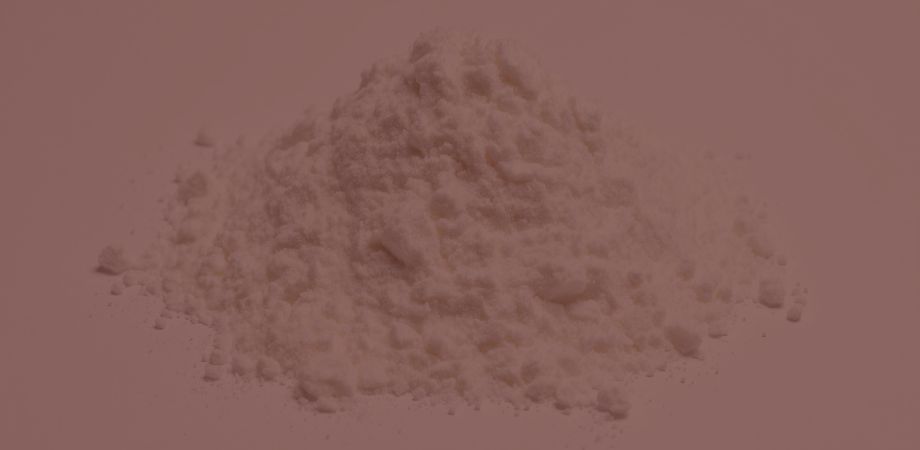
This is where the confusion—and the serious danger—comes in. Over the last decade, especially in certain urban and border regions, the word “charas” has been misapplied on the street to refer to a white powder substance. This can happen for several alarming reasons:
- White heroin or synthetic opioids sold as “charas”: In some drug networks, highly pure heroin (which can be a white or off-white powder) or synthetic opioids like fentanyl are deliberately mislabeled as “charas” to evade law enforcement attention or to make the product sound less harmful to new users.
- Adulterated or “cut” cannabis resin: Occasionally, low-grade hashish is mixed with white fillers—talcum powder, chalk, ketamine, or even crushed pharmaceutical pills—creating a greyish-white, crumbly substance that is still called “charas” by dealers.
- Regional code words: In a few areas, the word “charas” has evolved into a generic slang term for any powdered drug, much like “stuff” or “maan.” When someone says “white charas,” they might be referring to cocaine, methamphetamine, or an opioid powder.
- Misunderstanding among families: A worried parent may find a white powder and hear the word “charas” from their child or a friend. They then search for “charas white powder,” not realising the two things are completely different in the traditional sense.
No matter the explanation, a white powder sold as “charas” is a red flag for extreme danger. Unknown powders can contain lethal doses of fentanyl, synthetic cannabinoids, or toxic industrial adulterants that are far more deadly than cannabis itself.
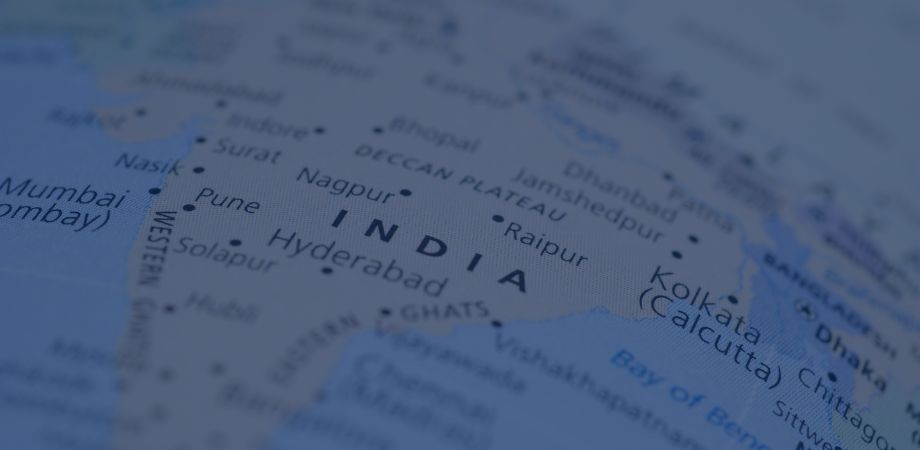
Where Is “Charas” Use Most Concentrated in India? States, Cities, and Official Statistics
To understand the scale of the problem, it helps to separate the two faces of “charas”: the traditional cannabis resin, and the dangerous white powder variant that often turns out to be heroin or a synthetic opioid.
Traditional Cannabis Charas (Hashish)
The production and use of genuine charas is deeply rooted in the Himalayan belt. The Malana region in Himachal Pradesh’s Parvati Valley is globally infamous for “Malana Cream,” a super-premium, high-THC charas that commands exorbitant prices in international markets. Beyond Malana, districts like Kullu, Mandi, and Kangra are also significant hubs for illicit cultivation and resin production.
Key statistics and hotspots for traditional charas:
- Himachal Pradesh consistently tops the list. According to the Narcotics Control Bureau (NCB), the state accounts for the largest volume of charas seizures in India. In a single recent year, the NCB and state police seized over 2,500 kg of charas across India, with Himachal alone contributing nearly a third of that figure.
- Uttarakhand (especially districts bordering Nepal) and Jammu & Kashmir are also significant sources and trafficking routes.
- Delhi serves as a major transit and consumption hub, with the NCB’s Delhi zonal unit regularly intercepting multi-kilogram consignments originating from the hills.
- Goa, Manali, Rishikesh, and Kasol are popular tourist destinations where charas is openly sold and consumed, often fueling a vibrant—and illegal—drug tourism culture.
- The National Drug Dependence Treatment Centre (NDDTC), under AIIMS, conducted India’s first comprehensive national survey on substance use in 2019. It found that approximately 3.1 crore Indians (2.8% of the population) use cannabis products, of which a significant subset uses charas or hashish. Daily use of cannabis, including charas, was reported by nearly 75 lakh individuals nationwide, many of them in the northern hill states and the western coastal region.
2. The “White Powder Charas” Phenomenon (Heroin and Opioids)
The dangerous mislabeling of white heroin or synthetic opioids as “charas” is not evenly spread—it follows the paths of India’s severe opioid crisis.
- Punjab has been the epicenter of heroin addiction in India. While the substance is usually called “chitta” or “smack” (brown sugar) in the state, there are growing reports from border districts like Amritsar, Gurdaspur, and Ferozepur where young users have been introduced to a white powder initially described as “synthetic charas.” The state’s Special Task Force (STF) on drugs seized over 700 kg of heroin in 2022 alone, and government de-addiction centers recorded more than 25,000 new opioid-related admissions in a single year.
- Delhi and the National Capital Region report a disturbing trend: white heroin and fentanyl-laced powders are sometimes marketed to college students and partygoers as “a clean, natural high” or “white charas.” The NCB’s Delhi zone has repeatedly issued alerts about synthetic opioids being sold under this disguise. In 2023, a single raid in South Delhi netted 5 kg of a white powder being sold as “premium Kashmiri white charas,” which laboratory tests confirmed was nearly pure heroin.
- Maharashtra, particularly Mumbai and Pune, has seen a rise in “white charas” linked to the street-level opioid trade. Some Mumbai de-addiction centers report that up to 15% of young patients admitted for heroin dependence initially believed they were using a high-grade cannabis concentrate because of the “charas” label.
- North-East India, especially states like Manipur and Mizoram, battles rampant heroin injection. Here, the white powder is rarely called charas, but the region’s role as a trafficking corridor means the same adulterated powders can surface in other states under different names.
Official data snapshot: The 2019 NDDTC report estimated that 2.3 crore Indians (0.7%) use opioids, and about 60 lakh require help for dependence. Of these, heroin (the likely identity of most “white charas”) accounts for a rising proportion. The government’s “Nasha Mukt Bharat” campaign has flagged 272 high-risk districts across India, including Amritsar, Ludhiana, Jalandhar, Kangra, Kullu, South Delhi, North Goa, and Mumbai Suburban, where combined cannabis and opioid abuse frequently intersect.
Bottom line: The risk of encountering a lethal white powder disguised as charas is not imaginary—it is a documented, growing threat in specific Indian cities and states. Knowing this geography can help families stay alert.
The Hidden Danger of Unknown White Powders
If you or someone you know has encountered a white powder being called “charas,” please understand:
- Fentanyl and carfentanil — synthetic opioids 50 to 10,000 times stronger than heroin — are increasingly found in street drugs across the world. A few grains, invisible to the naked eye, can stop a person’s breathing forever.
- White heroin (pure diacetylmorphine) is exponentially more potent and addictive than any cannabis product. Withdrawal from this class of drug is agonising and can be medically dangerous without supervision.
- Cocaine and methamphetamine are central nervous system stimulants that carry a completely different, but equally devastating, set of cardiac and psychiatric risks.
If you have found a white powder in your home and are trying to identify it: Do not taste it or handle it with bare skin. Seek professional help immediately. At Alpha Healing Center, we can guide you on the next steps, including safe and confidential intervention.
| Form | Appearance | THC Potency | Method of Use |
|---|---|---|---|
|
Bhang |
Green paste or drink (leaves and stems) |
Low (<5%) |
Eaten/drunk |
|
Ganja (Marijuana) |
Dried green-brown buds |
Moderate (10–25%) |
Smoked, vaporised, eaten |
|
Charas / Hashish |
Dark, sticky resin; not white |
High (20–60%) |
Smoked with tobacco, vaporised, eaten |
|
White powder sold as “charas” |
White or off-white powder |
Unknown; likely not cannabis |
Snorted, smoked, injected |
How Charas (Cannabis) Affects the Brain and Body
Even genuine charas, when used heavily, can lead to serious health and life consequences. It works by flooding the brain’s endocannabinoid system—a network of receptors that regulates mood, memory, appetite, sleep, and pain perception. THC binds to CB1 receptors in the brain, triggering the release of dopamine and creating the characteristic “high.”
Short-Term Effects (Minutes to a Few Hours)
- Euphoria, relaxation, and altered sensory perception
- Increased heart rate and bloodshot eyes
- Dry mouth (“cotton mouth”)
- Impaired short-term memory, concentration, and motor coordination
- Anxiety, paranoia, or panic attacks—especially with high-potency resin
- Distorted sense of time and space
- Appetite surge (“the munchies”)
Long-Term Effects of Chronic Charas Use
| System Affected | Complication | Underlying Mechanism |
|---|---|---|
|
Brain |
Cognitive decline, memory impairment, reduced IQ (when use begins in adolescence) |
CB1 receptor downregulation; interference with prefrontal cortex development |
|
Mental health |
Increased risk of psychosis, schizophrenia (especially in those with genetic vulnerability), depression, amotivational syndrome |
Dopamine dysregulation; neuroinflammatory pathways |
|
Respiratory |
Chronic bronchitis, lung damage, increased respiratory infections (when smoked with tobacco) |
Smoke inhalation; tobacco co-use almost universal in India |
|
Reproductive |
Decreased testosterone in men; disrupted menstrual cycles in women; reduced fertility |
HPA and HPG axis disruption |
|
Cardiovascular |
Elevated heart attack risk, especially within the first hour of use |
Increased myocardial oxygen demand; vasospasm |
|
Social/Occupational |
“Amotivational syndrome”—loss of drive, goal neglect, academic and career decline, family conflict |
Frontal lobe hypoactivity; dopamine reward system flattening |
Is Charas Addictive? Understanding Cannabis Use Disorder
Yes—cannabis, and particularly high-potency concentrates like charas, can lead to a clinically recognised addiction called Cannabis Use Disorder (CUD). The National Institute on Drug Abuse (NIDA) estimates that approximately 9% of people who use cannabis will become dependent, and the figure jumps to 17% for those who start in adolescence and to 25–50% among daily users.
Who Is Most Vulnerable?
- Individuals who begin using before the age of 18
- Those with a family history of addiction or mental illness
- People using high-THC products (like charas) daily or multiple times a day
- Individuals using cannabis to cope with untreated trauma, anxiety, or depression
At Alpha Healing Center, we see daily that charas is often dismissed as “soft” or “just a chill drug.” But when a person cannot get through a normal day without it, when relationships crumble, when panic attacks become the price of sobriety—that is addiction, and it deserves the same professional care as any other substance use disorder.
Behavioural Signs Someone Is Using Charas or “White Charas” Regularly
- A persistent sweet, herbal, or skunk-like odour on clothes, in the room, or on the breath
- Possession of rolling papers, small cylindrical pipes, chillums, or bongs
- Red, glassy eyes, and frequent use of eye drops to mask them
- Withdrawal from family activities, locked doors, excessive secrecy
- Loss of motivation, declining academic or work performance
- Financial issues or borrowing money without clear explanation
Physical and Psychological Signs of Using Charas
- Chronic cough, phlegm, and respiratory infections
- Increased appetite and noticeable weight changes
- Lethargy, sleeping at odd hours
- Memory lapses, difficulty following conversations
- Sudden bursts of anxiety, suspiciousness, or paranoia
- (If a white powder is involved) nosebleeds, track marks, dramatic weight loss, or episodes of unconsciousness
Important: If you recognise a pattern of white powder use, accompanied by symptoms like pinpoint pupils, nodding off, or breathing difficulty, you may be dealing with an opioid—this is a medical emergency. Seek immediate help.
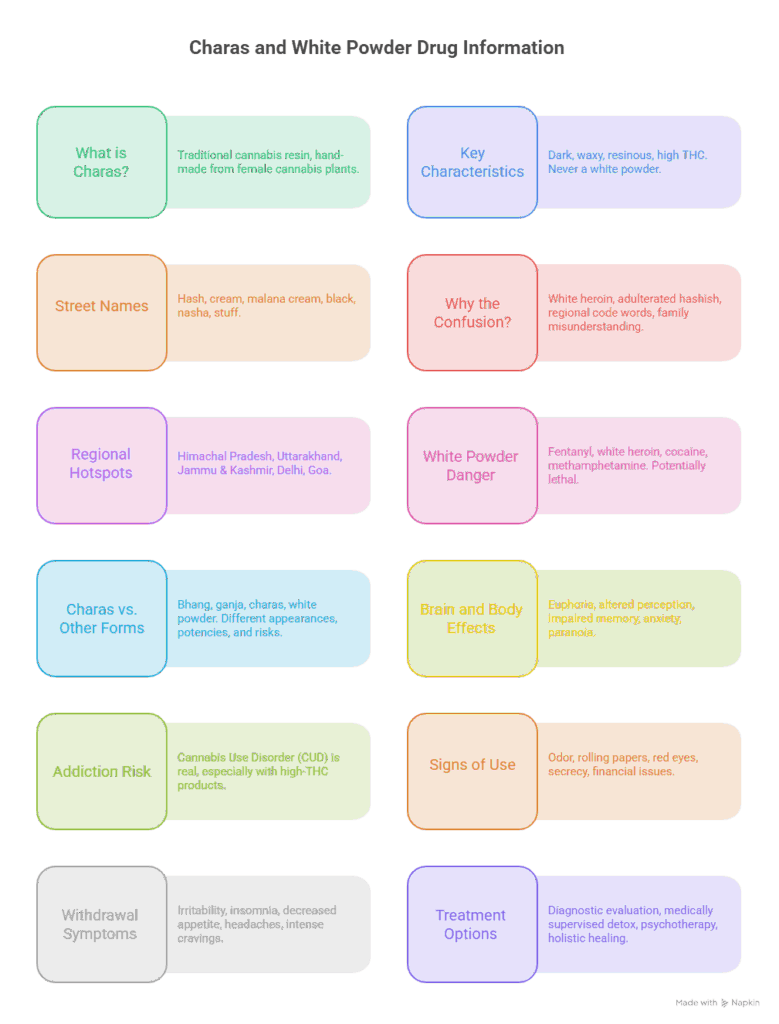
What Happens During Charas (Cannabis) Withdrawal?
Many people are shocked to learn that cannabis withdrawal is real, physically uncomfortable, and psychologically intense—particularly with the high THC levels found in charas.
Cannabis Withdrawal Syndrome (DSM-5 Criteria)
| Symptom Category | Specific Symptoms |
|---|---|
|
Mood |
Irritability, anger outbursts, aggression, anxiety, depression |
|
Sleep |
Insomnia, disturbing dreams, night sweats |
|
Appetite |
Significantly decreased appetite, weight loss |
|
Physical |
Headaches, tremors, sweating, chills, stomach pain |
|
Cravings |
Intense psychological craving for the substance |
Withdrawal Timeline for Charas (Heavy Use)
- Days 1–3: Onset of irritability, anxiety, insomnia, loss of appetite. Cravings begin.
- Days 2–6: Peak of symptoms—sleep disturbance, vivid nightmares, mood swings, physical discomfort.
- Days 7–14: Acute symptoms gradually subside; sleep and mood start improving.
- Weeks 3–4+: Post-acute withdrawal may persist: low-grade anxiety, anhedonia, episodic cravings, and difficulty finding pleasure in daily life. Without support, this phase is the highest risk period for relapse.
Note: If the “charas” is actually an opioid white powder, the withdrawal is completely different—agonising bone and muscle pain, vomiting, diarrhoea, and a high risk of seizures and psychosis. That requires emergency medical detox.
Treatment for Charas and Polysubstance Addiction at Alpha Healing Center
Recovery from any substance—whether it is traditional charas, an unknown white powder, or a combination of both—begins with a thorough, non-judgmental assessment and an individualised treatment plan. At Alpha Healing Center, we offer:
Comprehensive Diagnostic Evaluation
Before any treatment begins, our psychiatrists and clinical psychologists assess for co-occurring mental health conditions (anxiety, depression, trauma, psychosis) that often fuel cannabis and opioid use. This dual-diagnosis approach is the gold standard of addiction medicine.
Medically Supervised Detoxification
- For cannabis dependence: 24/7 medical support to manage anxiety, insomnia, and agitation using non-addictive, evidence-based medications and holistic comfort measures.
- For opioid (white powder) dependence: Full medical detox with buprenorphine or other MAT protocols, seizure monitoring, and intensive nursing care—because no one should have to endure withdrawal alone or in danger.
Evidence-Based Psychotherapy
- Cognitive Behavioural Therapy (CBT): Identifies and restructures the thought patterns that lead to substance use.
- Motivational Enhancement Therapy (MET): Helps individuals build internal motivation to change, even when ambivalent.
- Trauma-Informed Therapy: For the many individuals whose substance use is rooted in unresolved pain, abuse, or loss.
- Relapse Prevention Therapy: Building concrete skills to handle triggers, cravings, and high-risk situations without returning to use.
Holistic and Family-Centred Healing
- Yoga and mindfulness meditation: Long shown to reduce cannabis cravings and restore emotional regulation.
- Expressive arts, music, and movement therapy: Reconnecting with joy and self-expression in recovery.
- Family therapy sessions: Because addiction is a family disease, healing happens faster when loved ones are educated, supported, and involved.
- Nutrition and fitness counselling: Rebuilding physical health compromised by chronic use.
Aftercare and Lifelong Support
Recovery does not end at discharge. Our team designs a continuing care plan that includes outpatient therapy, 12-step or SMART Recovery meetings (like Narcotics Anonymous or Marijuana Anonymous), and regular check-ins—building a safety net that extends well into the first year and beyond.
A Message of Hope: Breaking Free Is Possible
Whether you are reading this because you found a white powder and heard the word “charas,” because you have been using hashish since your teenage years and feel like life is slipping through your fingers, or because you love someone who cannot seem to stop—you are in the right place. At Alpha Healing Center, we have witnessed people walk through our doors feeling utterly hopeless and, within weeks, rediscover strength, purpose, and peace. No judgment. No shame. Just science-backed, compassionate care that treats you as a whole person, not a label.
You do not have to do this alone.
Frequently Asked Questions
No. Pure, traditional charas is a dark, sticky cannabis resin. If someone is calling a white powder “charas,” it may be adulterated hashish, mislabeled heroin, synthetic opioids, or another dangerous substance. Treat all unknown powders as potentially lethal.
Yes. Because charas contains a much higher concentration of THC (20–60%) than ganja (10–25%), the risk of developing cannabis use disorder is significantly greater with charas. Daily users are particularly vulnerable.
Cannabis withdrawal is not directly life-threatening, but it can be intensely uncomfortable and psychologically destabilising. However, if the substance is actually an opioid (white powder), withdrawal can be medically dangerous. Professional assessment is essential.
Addiction does not happen overnight, but with daily use of high-THC resin, psychological dependence can develop within weeks. The brain’s reward system begins to need the drug just to feel “normal,” and stopping triggers withdrawal.
Heavy charas use is linked to heightened risk of psychosis, schizophrenia (especially in those with a family history), depression, severe anxiety, and amotivational syndrome—a state of chronic apathy and loss of drive.
Stay calm. Do not accuse or confront in anger. Do not touch the powder with bare skin. Seek guidance from a professional interventionist or call Alpha Healing Center for a confidential conversation about how to proceed safely and supportively.