

What Happens When You Drink Alcohol Everyday?
For many people in India today, having a daily drink feels normal—whether it is a peg after work, weekend socialising that turns into a weekday habit, or simply a way to cope with stress. However, when alcohol becomes a daily routine, the effects are not just temporary. They build over time and begin to impact both the body and mind in serious ways.
Understanding what happens when you drink alcohol every day can help you recognise early warning signs and take action before long-term damage sets in.
What does it really mean to drink alcohol every day?
Drinking alcohol every day means your body is constantly processing ethanol without enough recovery time. Each time you consume alcohol, the liver converts it into acetaldehyde, a toxic substance that damages cells.
Over time, this creates a continuous cycle of stress on the body.
For example, someone who drinks 2–3 pegs daily may initially feel relaxed, but gradually they need more alcohol to feel the same effect. This is how tolerance begins, often leading to dependency.
How common is daily alcohol consumption in India?
Alcohol consumption in India has been steadily rising, especially in urban populations.
Key facts and figures:
- According to the World Health Organization, per capita alcohol consumption in India increased by over 55% between 1992 and 2012.
- The National Family Health Survey reports that nearly 30% of Indian men consume alcohol, with a significant portion drinking regularly.
- A report by the Ministry of Social Justice and Empowerment (2019) found that over 5.7 crore Indians are dependent on alcohol.
- India contributes to a rising share of global alcohol-related health burden, particularly among young adults.
These numbers highlight that daily drinking is not an isolated issue—it is a growing public health concern.
How does daily drinking affect your liver?
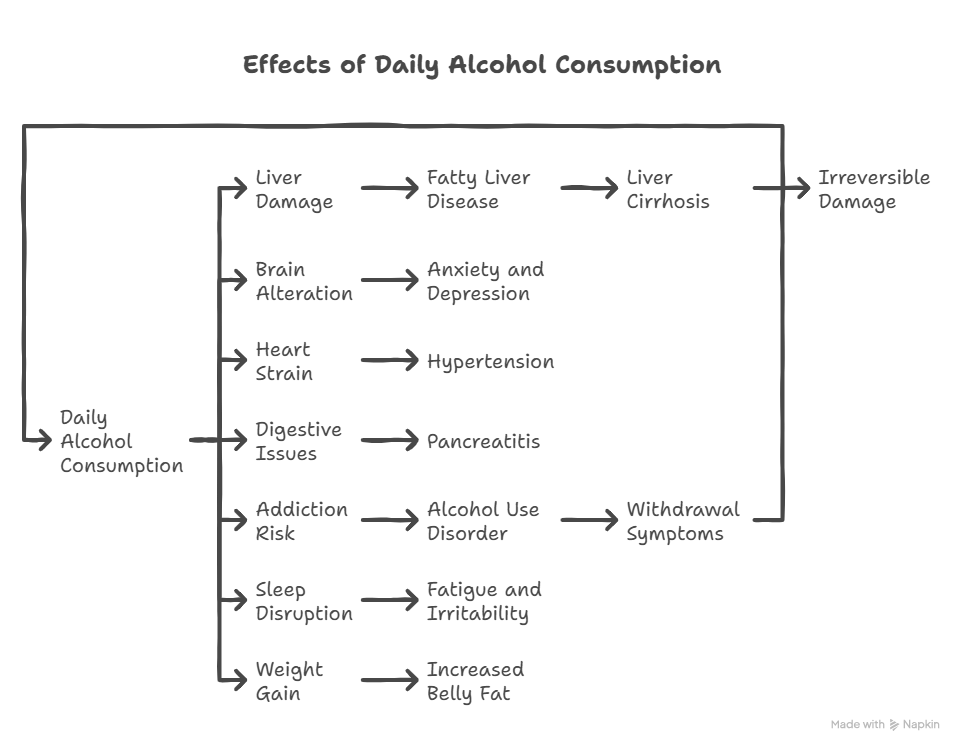
The liver is the most affected organ when alcohol is consumed daily. It works continuously to break down alcohol, but prolonged exposure leads to damage.
Initially, fat begins to accumulate in the liver, resulting in Fatty Liver Disease. At this stage, the condition can still be reversed if alcohol consumption stops.
However, continued drinking causes inflammation and scarring, which can progress to Liver Cirrhosis—a serious and often irreversible condition.
In many Indian cases, liver damage is only diagnosed at advanced stages due to lack of early symptoms.
What happens to your brain when you drink alcohol every day?
Alcohol directly alters brain function by affecting neurotransmitters like dopamine. This creates temporary feelings of pleasure and relaxation.
Over time, the brain adapts and starts depending on alcohol to maintain these feelings. Without alcohol, a person may feel anxious, irritable, or low.
This is why daily drinking is closely linked to conditions such as:
- Depression
- Anxiety Disorder
For example, many individuals begin drinking to manage stress, but eventually find that their stress and anxiety worsen when they are not drinking.
Does drinking alcohol every day affect your heart and blood pressure?
Yes, alcohol places continuous strain on the heart and blood vessels.
Regular intake increases heart rate and raises blood pressure, which can lead to Hypertension.
Over time, this increases the risk of cardiovascular complications, especially when combined with sedentary lifestyles common in urban India.
How does alcohol affect digestion and internal organs?
Alcohol irritates the digestive system and affects nutrient absorption. It increases stomach acid and weakens the digestive lining.
At the same time, the pancreas becomes inflamed due to constant exposure, leading to conditions like Pancreatitis.
This can cause severe abdominal pain and long-term digestive issues if not treated early.
Can daily drinking lead to alcohol addiction?
Yes, daily alcohol consumption significantly increases the risk of addiction.
As tolerance builds, a person needs more alcohol to achieve the same effect. This eventually leads to dependence, where drinking becomes necessary to function normally.
This condition is medically known as Alcohol Use Disorder.
Real-world example:
A person tries to stop drinking but experiences withdrawal symptoms like sweating, restlessness, and insomnia. To relieve these symptoms, they start drinking again—creating a cycle of dependency.
What are the early warning signs of harmful daily drinking?
The early signs are often overlooked because they develop gradually.
You may notice:
- Increased tolerance (needing more alcohol)
- Difficulty relaxing without alcohol
- Changes in mood and sleep patterns
- Reduced focus at work or in daily life
These signs indicate that alcohol is starting to affect both physical and mental health.
Does alcohol affect sleep and energy levels?
While alcohol may help you fall asleep faster, it disrupts the quality of sleep by interfering with the REM cycle.
As a result, you may wake up feeling tired, even after a full night’s sleep. Over time, this leads to fatigue, irritability, and reduced productivity.
How does drinking alcohol every day affect your weight?
Alcohol contains high-calorie content without nutritional value. Daily consumption increases overall calorie intake and slows down fat metabolism.
This often leads to:
- Weight gain
- Increased belly fat
- Reduced physical fitness
In many cases, individuals are unaware that their daily drinking habit is contributing significantly to weight gain.
Can your body recover if you stop drinking?
Yes, the body can recover, especially if action is taken early.
- The liver can begin healing within weeks
- Brain function improves gradually
- Energy levels and sleep quality get better
However, advanced conditions like cirrhosis may not be fully reversible, which is why early intervention is critical.
When should you consider professional help?
If alcohol has become a daily need rather than a choice, it may be time to seek professional support.
You should consider help if:
- You are unable to stop drinking
- You experience withdrawal symptoms
- Alcohol is affecting your health, work, or relationships
At a structured rehabilitation centre like Alpha Healing Center, individuals receive medically supervised detox, therapy, and personalised care designed for long-term recovery.
What are the treatment options if daily drinking becomes a habit?
If drinking alcohol every day has started affecting your health or daily life, professional support can make a significant difference.
Treatment usually involves a structured approach:
- The alcohol detox process helps remove toxins safely from the body
- Alcohol withdrawal treatment manages symptoms like anxiety, tremors, and sleep issues
- Inpatient alcohol rehab provides a controlled environment for recovery
- Therapy for alcohol addiction addresses emotional triggers and behavioural patterns
At a luxury rehab for alcohol addiction, individuals receive personalised care, privacy, and holistic healing. In India, specialised alcohol recovery programs focus on long-term sobriety rather than short-term fixes.
Many people who struggle with daily drinking often ask how to stop drinking everyday. The answer is not just willpower—it requires the right medical support, therapy, and environment.
Frequently Asked Questions
Yes, even small amounts consumed daily can accumulate over time and affect liver health, sleep, and mental wellbeing.
There is no completely safe level for daily drinking. Regular consumption beyond moderate limits increases long-term health risks.
Yes, it can lead to anxiety, depression, and emotional instability due to changes in brain chemistry.
Early signs include increased tolerance, cravings, difficulty stopping, and relying on alcohol for stress relief.
Initial improvements can be seen within a few weeks, but full recovery depends on the severity and duration of alcohol use.
For heavy drinkers, sudden stopping can cause withdrawal symptoms. Medical supervision is recommended.